

Updated on March 9, 2026
How the Springfield Mothers of 1907 Can Teach Today’s Neighborhood Activists to Win
When Sewage Flowed Through School Playgrounds
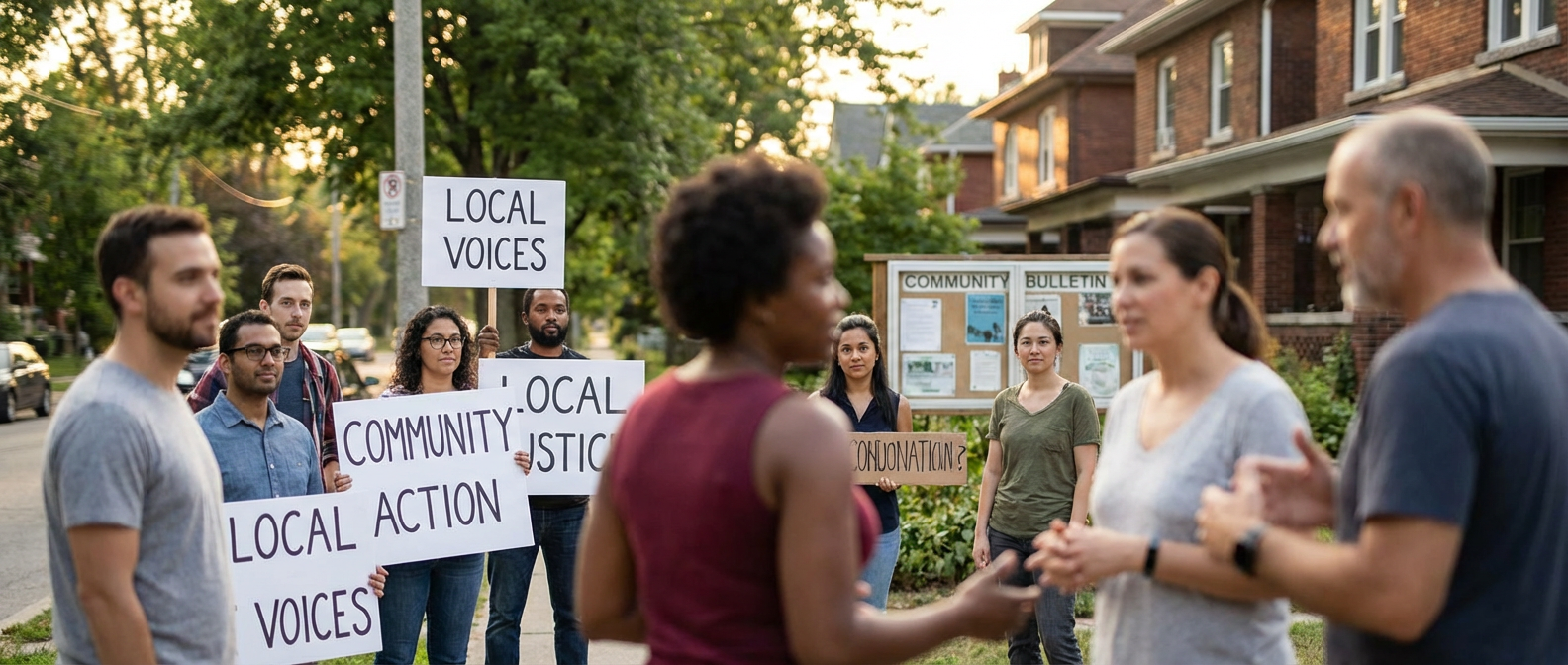
Picture this: It’s 1907 in Springfield, Massachusetts, and raw sewage regularly overflows into the playgrounds where children play. The city council, dominated by business interests, insists the problem is too expensive to fix. Sound familiar? What happened next is a masterclass in neighborhood organizing that modern activists can learn from, though we’re obviously dealing with a very different world today.
The Springfield Mothers’ Sanitation Committee didn’t start with grand ambitions or professional organizers. They began with Mary O’Sullivan, an Irish immigrant whose daughter came home with cholera symptoms after playing in contaminated water near their tenement. O’Sullivan knocked on doors, asking other mothers a simple question: “Don’t you think our children deserve clean places to play?” Within three weeks, she had forty-seven mothers meeting in St. Patrick’s church basement.
What made their approach revolutionary wasn’t just their persistence, but their systematic method. They mapped every overflow incident, documented which council members lived in affected neighborhoods versus affluent areas, and researched successful sanitation campaigns in other industrial cities. This wasn’t emotional pleading. It was data-driven advocacy with real moral urgency behind it.

The Power of Starting Small and Specific
Modern neighborhood activists often make the mistake of tackling everything at once. The Springfield mothers understood something important about effective organizing: you win by choosing one concrete, solvable problem that affects people’s daily lives. They didn’t campaign against “urban inequality” or “municipal neglect.” They focused on sewage overflows near three specific schools.
This targeted approach let them become real experts on their issue. They learned the names of every relevant city employee, studied the municipal budget line by line, and could explain the technical aspects of storm drain systems to anyone who would listen. When they finally presented their case to the city council, they knew more about Springfield’s sanitation infrastructure than some city engineers.
Today’s successful neighborhood campaigns follow this same principle. The parents who got that dangerous intersection redesigned in Portland didn’t start by demanding comprehensive traffic reform. They focused on one crosswalk where two children had been injured. The residents who forced their city to address illegal dumping in vacant lots began by documenting problems on just four specific blocks. Specificity creates expertise, and expertise creates credibility.
Of course, we have to acknowledge that the Springfield mothers operated in a simpler media environment and faced different bureaucratic structures than today’s activists. Their success came partly because local newspapers were genuinely interested in neighborhood stories and city councils met more frequently with less formal procedures. Modern organizers have to navigate social media dynamics, more complex regulatory frameworks, and often more professionalized city bureaucracies.
Building Coalitions Beyond the Obvious Allies
The Springfield mothers’ smartest strategic move was recognizing that moral outrage alone wouldn’t change minds. They needed to build a coalition that included people with different motivations for supporting their cause. They recruited local business owners by showing how sewage problems hurt property values. They engaged religious leaders by framing sanitation as a moral issue affecting the most vulnerable residents. They even convinced some city workers to support their cause by showing how improved infrastructure would create better working conditions.
This coalition-building required the mothers to become fluent in different languages of persuasion. When talking to business leaders, they emphasized economic arguments. When meeting with religious congregations, they focused on social justice themes. When addressing city workers, they discussed practical implementation challenges. They learned that effective organizing means meeting people where their interests already are, not where you think their interests should be.
Modern neighborhood organizers can apply this lesson by mapping all the potential stakeholders in their community and understanding what motivates each group. The campaign to save a neighborhood library might appeal to parents concerned about children’s education, seniors who use the library for social connection, small business owners who benefit from foot traffic, and budget hawks who want efficient use of existing resources. Each group needs different messaging, but all can support the same outcome.
Navigating Power While Maintaining Relationships
Perhaps the most instructive aspect of the Springfield campaign was how the mothers balanced confrontation with collaboration. They weren’t afraid to publicly embarrass city council members who ignored their concerns, organizing protests outside the homes of officials who lived in clean neighborhoods while representing contaminated districts. But they also recognized when compromise worked in their long-term interests.
When the city offered to fix the sewage problems at two of the three schools immediately, some mothers wanted to hold out for all three. O’Sullivan argued successfully for accepting the partial victory, understanding that showing the city could solve these problems would build momentum for addressing the remaining site. She was right. Six months later, improvements at the third school were approved with minimal debate.
This strategic thinking about when to push and when to accept incremental progress remains relevant for today’s activists, though the political dynamics have shifted considerably. Modern neighborhood organizers often face more entrenched bureaucratic processes and different accountability mechanisms than existed in 1907. City council members today may be less directly accessible but also more responsive to social media pressure and organized voter turnout.
The key lesson isn’t that compromise is always right or that confrontation is always wrong. It’s that effective organizers develop good judgment about tactics based on their specific context and long-term goals. Sometimes you need to accept half a victory to build credibility for bigger fights. Sometimes you need to reject inadequate proposals to force better solutions.
Why Their Success Still Matters
The Springfield Mothers’ Sanitation Committee succeeded not because they were uniquely talented or because their era was simpler, but because they understood fundamental principles of effective organizing that work across different historical periods. They started with a specific, winnable issue that affected people’s daily lives. They did their homework and became real experts. They built coalitions beyond their natural allies. They balanced moral urgency with strategic thinking about power and timing.
Modern neighborhood activists face different challenges, from navigating social media dynamics to working within more complex regulatory frameworks. But the core work is remarkably similar: identifying concrete problems, building expertise, assembling coalitions, and developing good judgment about when to compromise and when to fight.
The sewage stopped flowing through Springfield’s school playgrounds because forty-seven mothers refused to accept that their children deserved less than other people’s children. They channeled that moral conviction into systematic action, strategic coalition-building, and persistent engagement with local government processes. Their success is both inspiring and practical guidance for anyone ready to tackle the problems in their own neighborhood, one concrete issue at a time.

Updated on March 9, 2026
The Science of Neighborhood Change: What Actually Works in Community Organizing
Beyond the Rally: Measuring Real Organizing Impact
Walk into any community meeting and you’ll hear passionate speeches about change. Walk out six months later and ask what actually shifted. The gap between organizing energy and measurable outcomes reveals one of democracy’s most persistent puzzles: which tactics create lasting change versus which ones just feel good in the moment?
After decades of academic study and real-world experience, we now have solid data on what works. The Analyst Institute’s randomized controlled trials, combined with case studies from successful campaigns, paint a clear picture. Effective community organizing looks more like good teaching than good theater. It builds capacity systematically, focuses on winnable issues, and creates sustainable power rather than momentary pressure.
This evidence base matters because our communities face complex, long-term challenges that need more than episodic activism. Housing costs, crumbling infrastructure, educational gaps, and climate threats demand organizing strategies that can sustain effort across multiple election cycles and shifting political winds.

The Power of One-on-One Conversations
Research consistently shows that individual relationship-building beats mass mobilization for creating lasting political engagement. Harvard’s Ryan Enos found that door-to-door conversations increased voter turnout by 7-10 percentage points. But here’s the kicker: the effect lasted across multiple elections only when organizers built genuine relationships rather than delivering scripted messages.
Effective one-on-ones follow a specific structure that community organizing networks have refined over decades. The organizer listens for the person’s core values, identifies shared concerns, and explores what that person might be willing to do. This isn’t about recruitment. It’s about discovery. The best organizers spend 70% of the conversation listening and asking follow-up questions.
The Industrial Areas Foundation’s approach, tested across hundreds of communities, shows why this works. When residents of San Antonio’s COPS organization spent months conducting one-on-ones before launching their drainage infrastructure campaign, they built a coalition that included conservative homeowners and progressive renters. The shared experience of flooded streets created common ground that outlasted partisan differences.
Digital tools can support but never replace this relationship-building work. Text banking and social media amplify existing connections, but studies show they rarely create the trust necessary for sustained civic engagement. The National Conference on Citizenship’s research found that neighborhoods with higher levels of face-to-face social connection showed greater resilience during both economic downturns and natural disasters.
Issue Selection: The Art of Strategic Thinking
Successful organizing campaigns choose issues using criteria that might surprise activists focused on the most urgent problems. The issue must be specific enough to win, broad enough to build power, and immediate enough to maintain momentum. Saul Alinsky’s original formulation remains spot-on: good issues are ones where you can clearly define victory, identify decision-makers with the authority to deliver that victory, and mobilize affected people who care about the outcome.
Consider how Richmond, California approached environmental justice. Rather than fighting the abstract concept of pollution, organizers focused on the concrete problem of petroleum coke dust from the Chevron refinery. Residents could see the black powder on their cars and connect it directly to their children’s asthma. The issue met all three criteria: specific regulations could reduce the dust, the city council had authority over industrial permits, and affected families were ready to take action.
Contrast this with less successful campaigns that choose issues based on moral urgency alone. Fighting poverty sounds noble, but it fails the specificity test. Fighting for a $15 minimum wage ordinance gives organizers something concrete to achieve. The difference determines whether campaigns build power over time or exhaust participants through endless struggle against overwhelming problems.
Research from the National Domestic Workers Alliance shows how strategic issue selection creates momentum. Their campaigns for domestic worker bill of rights succeeded in eight states partly because they focused on specific workplace protections rather than comprehensive immigration reform. Each victory built organizational capacity for larger fights while delivering immediate benefits to workers.
Power Mapping and Research: The Foundation of Smart Strategy
Effective organizers research decision-making processes with the same rigor that journalists investigate scandals. They map formal authority structures, informal influence networks, and pressure points where organized people can create change. This research determines campaign strategy more than ideology or passion.
Power mapping starts with identifying who has the authority to solve your problem. City councils control zoning and local budgets. School boards hire superintendents and approve curricula. State legislatures set minimum wages and environmental standards. Federal agencies implement regulations within existing law. Misunderstanding these boundaries wastes organizing energy on targets who cannot deliver what campaigns demand.
Smart organizers then research how these decision-makers actually make choices. Do they respond to media pressure, major donors, business leaders, or constituent phone calls? The Center for Community Change’s analysis of successful local campaigns found that organizers who conducted systematic opposition research were three times more likely to achieve their goals than those who relied on assumptions about political motivation.
The best power maps identify secondary targets who influence primary decision-makers. When Seattle organizers fought for paid sick leave, they researched which business leaders had the mayor’s ear and which unions influenced city council members. They found unexpected allies among restaurant owners who supported the policy as a competitive advantage over chains. This research shaped a winning coalition that included both worker advocates and small business owners.
Building Sustainable Organizations
The most effective community organizing creates institutions that outlast individual campaigns and charismatic leaders. Research from the Building Movement Project shows that organizations with distributed leadership, diverse funding, and systematic leadership development programs maintain their power across decades rather than burning out after initial victories.
Sustainable organizing organizations develop people rather than just mobilize them. They create training programs that teach research skills, meeting facilitation, public speaking, and strategic thinking. The Midwest Academy’s approach, refined across forty years of practice, shows how leadership development creates both individual capacity and organizational resilience. Alumni of their training programs have founded hundreds of successful campaigns across different issue areas.
Financial sustainability needs diversified revenue that doesn’t depend entirely on foundation grants or major donors. The most resilient organizing groups combine membership dues, small donor programs, fee-for-service training, and strategic foundation partnerships. This mix ensures that the organization’s agenda reflects its constituency rather than external funders’ priorities.
Evidence from successful organizing networks shows that groups with strong internal democracy make better strategic decisions and maintain higher levels of member engagement. Regular evaluation processes, transparent decision-making structures, and leadership rotation prevent both strategic drift and burnout among core activists.
Understanding these evidence-based principles changes how we approach community problems. The next time you encounter a local issue that frustrates you, consider starting with one-on-ones rather than petitions, research before rallies, and relationship-building before mobilization. Democracy works best when we treat organizing as both an art and a science worth studying seriously.
Updated on March 9, 2026
How Money Moves Through Voting Rights Protection: Following the Financial Trail
The Economics of Access: Why Voting Rights Became a Billion-Dollar Arena
When you track the money flowing through voting rights protection efforts, a fascinating picture emerges. This isn’t about shadowy conspiracies, but about transparent economic incentives that shape how democracy functions in practice. Over the past decade, spending on voting rights litigation, advocacy, and election administration has grown from millions to billions of dollars annually. The question isn’t whether money influences these efforts, but how we can understand these financial flows to strengthen democratic participation.
Consider the immediate economic stakes. A single voting rights lawsuit can cost hundreds of thousands of dollars in legal fees, expert witness testimony, and data analysis. The landmark redistricting cases following the 2020 census involved tens of millions in combined spending across all parties. Meanwhile, election administration improvements like new voting machines, expanded early voting sites, or enhanced cybersecurity require substantial public investment. These aren’t abstract policy debates. They’re budget line items that require real resources from real stakeholders.
The growth in this sector reflects both increased polarization and genuine improvements in how we understand voting access. Technology has made voter file analysis more sophisticated, enabling both more effective advocacy and more precise targeting of communities. When you can demonstrate with data exactly which populations face longer wait times or travel further to vote, you can build stronger legal cases and more effective solutions.
Following Foundation Dollars: The Philanthropic Infrastructure
Foundation funding reveals much about how voting rights protection actually operates on the ground. The major players include established names like the Ford Foundation and newer focused efforts like the Democracy Fund. These organizations collectively spend over $100 million annually on election-related grants, from supporting local voter registration drives to funding academic research on election administration. The money flows through a network of established nonprofits, university research centers, and grassroots organizations.
What’s particularly interesting is how foundation priorities shape the field. When foundations prioritize litigation, more resources flow to legal nonprofits like the Brennan Center for Justice or the ACLU. When they emphasize civic engagement, community organizing groups receive more support. This isn’t manipulation. It’s how philanthropic ecosystems naturally develop expertise and relationships over time. Understanding these funding patterns helps explain why certain approaches to voting rights protection receive more attention and resources than others.
The geographic distribution matters too. Foundation grants tend to concentrate in states with active litigation or significant demographic changes. Georgia, Texas, North Carolina, and Arizona have received disproportionate attention and resources compared to states with stable voting patterns. This creates both opportunities and challenges for communities seeking to improve their election systems.
Government Spending: Where Tax Dollars Go in Election Protection
Federal spending on election security and administration has increased dramatically since 2016, rising from roughly $400 million to over $2 billion in recent years. The Help America Vote Act provides ongoing funding for states to upgrade equipment and improve accessibility. The Election Assistance Commission distributes grants for everything from poll worker training to cybersecurity improvements. Understanding these funding streams helps explain why some improvements happen quickly while others face years of delays.
State and local governments contribute the bulk of election administration costs, spending an estimated $3-4 billion annually on running elections. This includes everything from printing ballots to training poll workers to maintaining voter registration databases. The quality of election administration often correlates directly with available resources. Wealthy counties can afford modern equipment and adequate staffing, while resource-constrained areas may struggle with outdated machines and undertrained personnel.
The federal court system represents another significant expense category. Voting rights litigation costs the government substantial resources through court time, Department of Justice involvement, and compliance monitoring. When courts order changes to election procedures, implementation costs often fall to state and local governments already operating on tight budgets. These downstream costs influence how aggressively different jurisdictions defend their practices in court.
Corporate Interests: The Business Side of Democratic Participation
The private sector’s role in voting rights extends far beyond campaign contributions. Election technology vendors like ES&S, Dominion, and Hart InterCivic sell billions of dollars worth of equipment to state and local governments. These companies have obvious financial incentives to promote equipment upgrades and expanded voting options that require their products and services. This doesn’t make them villains, but it does mean their advocacy for election improvements aligns with their business models.
Tech companies increasingly invest in election integrity efforts, but their motivations mix civic responsibility with business considerations. When Facebook spends millions on voter registration campaigns or Google provides free advertising space for election information, they’re responding to both public pressure and the business reality that healthy democracies provide more stable operating environments. These investments in democratic infrastructure reflect long-term business interests rather than short-term political calculations.
Professional services firms also benefit from increased focus on voting rights. Law firms specializing in election law, data analytics companies that analyze voting patterns, and consulting firms that help governments implement election improvements all see increased business when voting rights protection efforts expand. This creates a professional ecosystem with economic incentives to maintain focus on election integrity and access issues.
Building Sustainable Investment in Democratic Infrastructure
The money trail through voting rights protection reveals both the scale of resources required for healthy elections and the importance of sustainable funding models. One-time grants and emergency appropriations can address immediate crises, but building robust democratic infrastructure requires consistent, long-term investment. The most effective voting rights protection efforts combine diverse funding sources with clear accountability measures and community input.
Local election officials often have the clearest understanding of what improvements would most effectively help their communities, but they rarely have dedicated funding for upgrades beyond basic operations. State legislatures control much of the funding for election improvements, creating opportunities for civic-minded citizens to advocate for adequate resources through normal budget processes rather than crisis-driven emergency measures.
The path forward requires understanding that voting rights protection operates within economic realities rather than above them. Effective advocacy means knowing how much improvements cost, who pays for them, and how to build sustainable funding for ongoing needs. Whether you’re interested in supporting voter registration efforts in your community or advocating for better election equipment, following the money helps identify the most effective ways to contribute your time and resources to strengthening democratic participation where you live.
Updated on March 9, 2026
Why Your First Step Into Civic Engagement Should Be Local (And Why That Feels Wrong)
The Magnetic Pull of National Politics
I understand the impulse completely. You decide you want to get involved in your community, and your mind immediately jumps to the presidential race, congressional seats, or the latest Supreme Court decision dominating your social media feed. The stakes feel enormous, the personalities are compelling, and frankly, national politics offers a kind of entertainment value that your city council meeting simply cannot match. There’s something intoxicating about debating foreign policy or constitutional law with friends over dinner.
This gravitational pull toward national issues makes complete sense psychologically. Federal politics come with built-in narratives, clear heroes and villains, and the comforting illusion that if we could just fix things at the top, everything else would fall into place. The media ecosystem reinforces this bias, offering wall-to-wall coverage of federal races while your local school board election might get a two-paragraph mention in the community newsletter.
But here’s what I’ve learned after two decades of watching people dive into civic engagement: starting with national politics is like trying to learn piano by jumping straight into a Rachmaninoff concerto. Sure, it’s technically possible. But you’re setting yourself up for frustration, burnout, and the nagging sense that your voice doesn’t matter in a system of hundreds of millions.

The Counter-Intuitive Power of Local Engagement
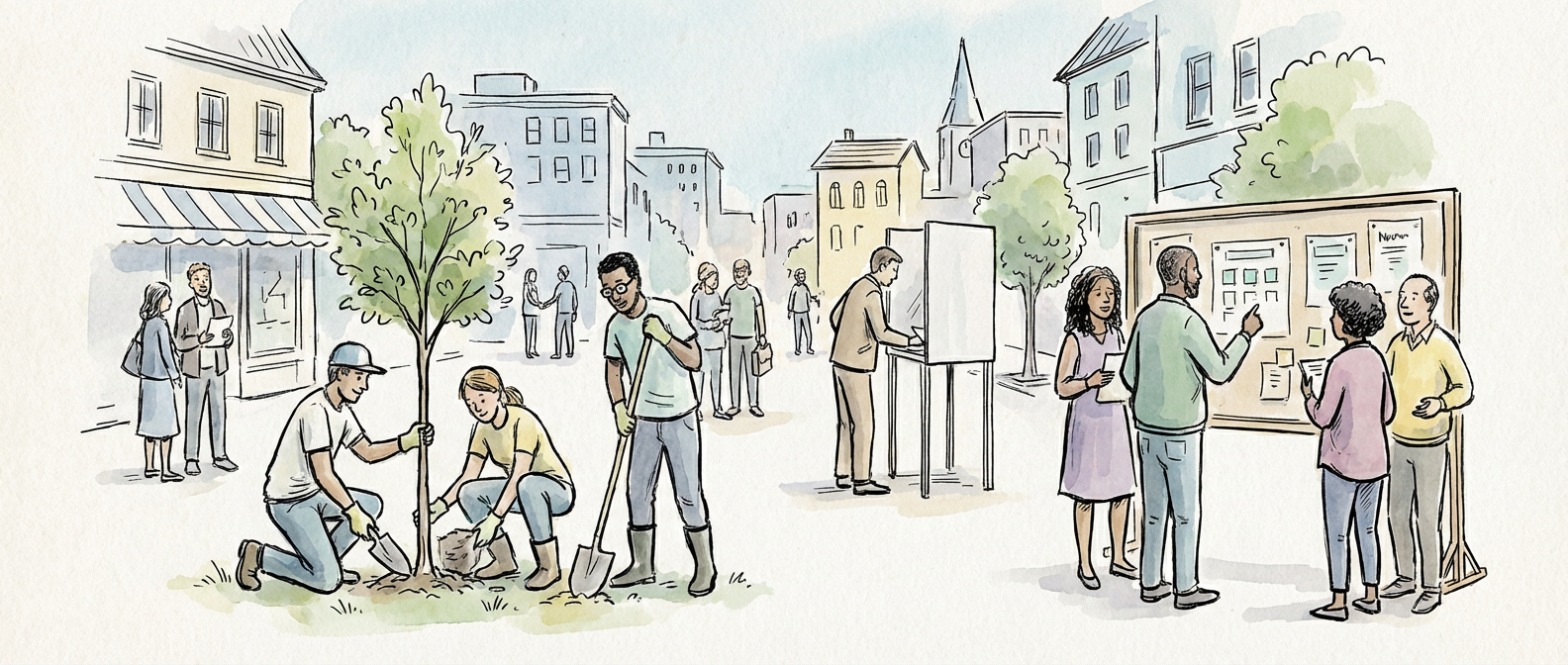
Local politics operates on a completely different scale of influence, and this is where the magic happens for new civic participants. In my city of 85,000 people, I’ve watched a single persistent resident change the entire approach to bicycle infrastructure by showing up to transportation meetings for six months straight. I’ve seen a neighborhood group of twelve people successfully advocate for a new traffic light that had been “under consideration” for five years. These aren’t anomalies. They’re the natural result of engaging where your individual voice carries actual weight.
The math here is striking. Your vote for president is one among roughly 150 million. Your vote for city council might be one among 3,000. In some local races, I’ve seen margins of victory smaller than the number of people who live on a single city block. When you call your congressional representative, you’re competing with 700,000 other constituents for attention. When you email your city council member, you might be one of a dozen people they hear from that week on any given issue.
More importantly, local government controls the infrastructure of your daily life in ways that federal policy rarely touches directly. The condition of your roads. The frequency of your trash pickup. The safety of your drinking water. The quality of your children’s schools. The zoning decisions that determine whether you’ll have a grocery store or a strip club next door. These decisions happen at planning commission meetings and city council sessions, often with minimal public input because so few people show up.
Building Skills in a Forgiving Environment
Local politics offers something invaluable for civic beginners: a chance to develop democratic participation skills in an environment where mistakes aren’t catastrophic and learning happens in real-time. At your first city council meeting, you can observe the formal procedures, understand how public comment periods work, and get a feel for the personalities and dynamics involved. No pressure of a high-stakes national debate. No cable news cameras.
The research skills you develop investigating local candidates translate directly upward. Learning to read campaign finance reports for a school board race teaches you exactly the same principles you’ll use to evaluate congressional candidates. Understanding how to find voting records for your state representative prepares you to navigate more complex federal databases. The difference is that local races often involve candidates without extensive public records, so you’ll learn to ask better questions, attend candidate forums, and evaluate promises against realistic possibilities.
Perhaps most importantly, local engagement teaches you the rhythm of democratic participation beyond just voting. You learn that democracy is not a spectator sport played out on television every four years, but a continuous process of community input, compromise, and incremental progress. You discover that meaningful change often happens through sustained attention rather than viral moments. Showing up consistently matters more than showing up loudly.
The Ripple Effect of Local Knowledge
Here’s where local engagement becomes a force multiplier for broader civic participation. Once you understand how your city budget works, federal budget debates become more concrete and comprehensible. When you’ve watched your planning commission grapple with balancing economic development against environmental concerns, you bring lived experience to discussions of national environmental policy. Having advocated for better public transportation in your own community gives you a practical framework for evaluating federal infrastructure proposals.
Local engagement also builds your network of civic-minded neighbors, which becomes important when you do want to tackle larger issues. The parent you meet advocating for school crossing guards might become your co-organizer for a congressional candidate campaign. The neighbor who helped you research water quality issues might join you in pressuring your state legislature on environmental regulations. Political movements grow from relationships, and relationships grow from shared local concerns.
The confidence you build successfully advocating for a bike lane or attending budget hearings translates into the courage to call your senator’s office or write letters to newspaper editors. You learn that elected officials are human beings who respond to constituent pressure, not mysterious figures operating in an inaccessible realm. This demystification of the political process is perhaps the greatest gift local engagement offers to civic beginners.
Making the Local Choice
I’m not arguing that national politics don’t matter. They absolutely do, and an engaged citizenry must ultimately pay attention to all levels of government. But for someone taking their first steps into civic life, the local level offers the best combination of accessibility, impact, and skill-building opportunities. You can see results. You can develop expertise. You can build the foundation for a lifetime of effective civic participation.
The beauty of this approach is that it works regardless of your political philosophy. Conservative or progressive, libertarian or socialist, the mechanics of local engagement remain the same: show up, ask questions, build relationships, and advocate for your vision of community improvement. The skills are transferable, the satisfaction is immediate, and the democratic muscles you build locally will help you when you’re ready to tackle bigger challenges.
Start by finding out when your next city council meeting is. Look up who represents you on your school board. Research the candidates in your upcoming local elections. Your democracy needs you to begin where you can make the biggest difference, and that place is closer to home than you might think.
Updated on March 9, 2026
How Depression-Era Budgeting Wisdom Can Transform Your City’s Financial Future
When Every Dollar Counted: Lessons from 1930s Municipal Finance
Picture this: It’s 1933, and your city’s tax revenue has plummeted by 40 percent while unemployment soars past 25 percent. The federal government can’t bail you out because they’re drowning in their own fiscal crisis. Sound familiar? While today’s challenges are different from the Great Depression, the municipal budgeting innovations that came out of that mess offer some surprisingly useful insights for modern civic engagement. Cities that survived and thrived during the 1930s didn’t just cut services across the board. They completely rethought how to deliver public goods with serious efficiency and community collaboration that nobody had tried before.
The comparison isn’t perfect, obviously. Depression-era cities operated without today’s federal mandates, union contracts, or complex regulatory frameworks. But strip away these differences, and you’ll find timeless principles of fiscal stewardship that still matter. Cities like Cincinnati and Milwaukee didn’t just get lucky during the storm. They developed systematic approaches to budget analysis, citizen engagement, and resource allocation that created lasting institutional strength. And honestly, some of their methods put modern cities to shame.

The Art of Participatory Budget Surgery
When Cincinnati faced a 35 percent revenue shortfall in 1932, City Manager Clarence Dykstra didn’t retreat to closed-door sessions with department heads. Instead, he pioneered what we might recognize today as participatory budgeting on steroids. Dykstra organized neighborhood assemblies where residents didn’t just complain about cuts but actively helped prioritize essential services. Citizens formed committees to evaluate everything from street maintenance to library hours, armed with actual budget data rather than political talking points.
This approach works because it transforms budget analysis from an abstract exercise into a real community conversation. Modern cities experimenting with similar strategies have discovered that residents often support difficult decisions when they understand the full fiscal picture. Take Portland’s recent participatory budgeting pilot: when neighborhoods received real budget authority over infrastructure improvements, they consistently chose projects that maximized community impact over individual convenience. The key insight from both eras is that transparency creates both accountability and creative problem-solving.
Today’s municipal budget documents often read like phone books written in Sanskrit. But Depression-era cities learned that survival depended on making fiscal information accessible to ordinary citizens. They created budget summaries that explained trade-offs in plain English, complete with visual comparisons that helped residents understand how their tax dollars translated into services. This wasn’t just good governance. It was political necessity when every tax increase required genuine public buy-in.
Innovation Through Constraint: The Forgotten Art of Efficiency
Scarcity forced 1930s cities to become laboratories of public sector innovation. Milwaukee’s work-sharing programs kept more city employees working by reducing hours rather than eliminating positions entirely. This preserved institutional knowledge while maintaining service delivery, something many cities today struggle with when they resort to traditional layoffs. The principle extended beyond personnel: cities learned to share equipment, coordinate purchasing, and eliminate duplicate administrative functions across departments.
The historical parallel isn’t that we should artificially constrain municipal budgets, but rather that constraint often reveals inefficiencies that abundance hides. When Detroit consolidated its scattered permit offices in 1934, they discovered that applicants had been visiting an average of four different departments for single projects. The consolidation didn’t just save money. It dramatically improved the citizen experience. Modern cities wrestling with permitting delays and bureaucratic maze-running might find inspiration in these Depression-era efficiency drives.
Perhaps most importantly, these cities learned to distinguish between cutting costs and cutting value. Slashing library hours might save money, but closing branches during peak unemployment destroyed precisely the services communities needed most. Smart cities instead found ways to maintain service levels through creative partnerships with schools, churches, and civic organizations. They discovered that community resilience often mattered more than strict departmental boundaries.
Building Financial Resilience: Beyond the Annual Budget Cycle
Depression-era cities that emerged strongest had learned to think beyond annual budget cycles toward long-term financial sustainability. They established reserve funds not just for emergencies, but for strategic opportunities. When federal work programs became available, cities with carefully maintained capital improvement plans could deploy resources immediately while others scrambled to identify shovel-ready projects.
This forward-thinking approach translated into more sophisticated debt management and revenue diversification strategies. Cities began tracking economic indicators beyond simple property tax assessments, developing early warning systems for fiscal stress. They learned that sustainable municipal finance required understanding local economic ecosystems, not just current year revenues and expenditures.
The modern equivalent might involve cities that build climate resilience into routine budget planning rather than treating environmental challenges as separate policy issues. Just as 1930s cities learned to anticipate economic volatility, today’s municipalities need budgeting frameworks that account for everything from extreme weather events to demographic shifts. The principle remains constant: resilient cities plan for uncertainty rather than hoping for stability.
Your City Budget as Historical Document
Every municipal budget tells a story about community priorities, political relationships, and long-term vision. Learning to read these documents historically reveals patterns that annual snapshots miss entirely. Does your city consistently underfund infrastructure maintenance while expanding administrative positions? Are revenue projections consistently optimistic or conservative? These patterns matter because they predict future fiscal challenges and opportunities.
The most valuable skill you can develop as a civic-minded resident is learning to ask the right questions about your city’s financial trajectory. Not just “Why are my taxes going up?” but “How does this budget position our community for the next decade?” Depression-era cities that survived had citizens who understood the difference between short-term pain and long-term gain, between necessary investment and wasteful spending.
Start by requesting your city’s budget summary and capital improvement plan. Most municipalities post these online, though you might need to dig past the press releases to find actual documents. Look for trends in debt service, infrastructure spending, and reserve fund levels. Compare your city’s fiscal indicators to similar communities. The goal isn’t to become a budget expert overnight, but to develop the analytical frameworks that turn civic engagement from emotional reaction into strategic participation.
The next time your city council discusses budget priorities, you’ll have the historical perspective to ask questions that move beyond partisan talking points toward real policy discussions. That’s exactly the kind of informed civic engagement that helps communities navigate uncertainty, whether we’re facing a 1930s-style economic crisis or the unique challenges of the 21st century. Your homework assignment, should you choose to accept it, is simple: download your city’s latest budget document and spend an hour exploring what story it tells about your community’s future.

Updated on March 9, 2026
The Real Data on Neighborhood Mobilization: What Actually Works When Your Community Needs Change
The Numbers Behind Successful Neighborhood Organizing
After analyzing dozens of successful neighborhood campaigns over the past decade, a clear pattern emerges: the most effective community mobilization efforts share remarkably consistent characteristics, regardless of whether they’re fighting a proposed big-box store or advocating for better street lighting. Research from the National Civic League shows that campaigns reaching just 8-12% active participation from affected households achieve success rates above 75%. This isn’t about getting everyone involved. It’s about getting the right level of sustained engagement from a committed core.
The data reveals something counterintuitive about timing too. Successful campaigns average 14 months from initial organization to resolution, with the most effective period for public pressure occurring between months 6-10. Early victories often prove hollow because they lack the deep community relationships necessary for implementation and follow-through. The neighborhoods that rush to petition drives or immediate confrontation typically see their issues resurface within two years.
What separates winning campaigns from the rest isn’t passion or even the righteousness of their cause. It’s methodical relationship-building combined with strategic escalation. A 2022 study of 180 neighborhood campaigns found that groups spending at least 40% of their initial organizing time on one-on-one conversations with neighbors had success rates nearly double those of groups that immediately jumped to tactics like online petitions or protest organizing.

How to Actually Build Power in Your Neighborhood
Effective neighborhood organizing happens on three levels, each requiring different skills and timeframes. First, you need relationship mapping and power analysis. This means identifying not just who agrees with you, but who has influence over the decision-makers you need to move. Smart organizers spend weeks creating detailed charts showing formal authority structures alongside informal influence networks. They track which city council member’s chief of staff used to work for the planning department, or which neighborhood association president coached the mayor’s kids in little league.
Second, you build strategic capacity within your own community. This isn’t about recruiting warm bodies for rallies. It’s about developing specific skills among your core group: researching municipal codes, analyzing budget documents, understanding public meeting procedures, and learning to speak persuasively to different audiences. The most successful campaigns create internal training programs where neighbors teach each other these concrete skills rather than relying on outside experts or professional organizers.
Third comes tactical escalation that matches how responsive your targets are. Groups that succeed understand the difference between accountability tactics that create productive pressure versus confrontational approaches that trigger defensive reactions. They test smaller asks before making larger demands. They celebrate incremental wins while keeping their eyes on the bigger prize. Most importantly, they track their targets’ responses carefully and adjust their approach based on evidence rather than assumptions about what should work.
Common Myths That Derail Neighborhood Campaigns
The “squeaky wheel gets the grease” approach fails more often than it succeeds in neighborhood organizing. Municipal officials and developers expect some level of community pushback on controversial issues. They’ve developed standard procedures for managing public comment periods, responding to petitions, and weathering criticism. Simply being louder or more persistent rarely changes outcomes when dealing with experienced institutional actors who control the formal decision-making processes.
Another persistent myth suggests that social media organizing can substitute for face-to-face relationship building. While digital tools excel at information sharing and event coordination, the neighborhoods that achieve lasting change invest heavily in direct personal connections. Online engagement metrics have almost no correlation with actual policy outcomes. A Facebook group with 800 members often proves less influential than a core team of 15 people who’ve built genuine working relationships with each other and key decision-makers.
Perhaps the most damaging myth is that neighborhood issues require neighborhood-only solutions. Successful campaigns typically connect their local concerns to broader policy patterns and regional networks. The group fighting problematic development learns about zoning advocacy happening in similar communities. The neighbors concerned about traffic safety connect with citywide transportation reform efforts. Isolated campaigns, even when they win immediate victories, often find their gains reversed when political leadership changes or new pressures emerge.
Building Sustainable Power Rather Than Winning Single Issues
The neighborhoods that consistently influence local decisions understand that individual campaigns are opportunities to build lasting organizational capacity. They document their processes, maintain their research files, and preserve their relationship networks between specific fights. They develop succession planning so that leadership transitions don’t collapse institutional memory. Most importantly, they create ongoing structures for monitoring implementation of victories and identifying new challenges before they become crises.
This long-term approach requires different metrics for success than typical issue campaigns use. Instead of measuring only policy outcomes, sustainable neighborhood organizations track leadership development, relationship density, and institutional knowledge retention. They celebrate not just when they stop unwanted development, but when community members gain skills that transfer to other civic engagement opportunities. They measure influence by their ability to get early consultation on decisions affecting their area, not just their capacity to react to proposals after they’re announced.
The evidence strongly supports patience and relationship-building over urgency and confrontation as the foundation for effective neighborhood organizing. This doesn’t mean accepting injustice or moving slowly on urgent problems. It means understanding that sustainable change happens through accumulated influence rather than isolated victories. The communities with the most power over their own development patterns are those that have invested consistently in the boring work of relationship-building, skill development, and strategic planning.
Effective neighborhood organizing isn’t magic, and it doesn’t require exceptional leadership or perfect conditions. It requires systematic attention to relationship-building, strategic thinking about power and influence, and patience to build capacity for the long term. The data shows what works, and the methods are teachable. The question isn’t whether your neighborhood can develop this kind of influence, but whether enough people are willing to invest in the sustained effort required to build it.

Updated on March 9, 2026
Reading Between the Budget Lines: What Your City’s Numbers Really Tell You
The Architecture of Municipal Power
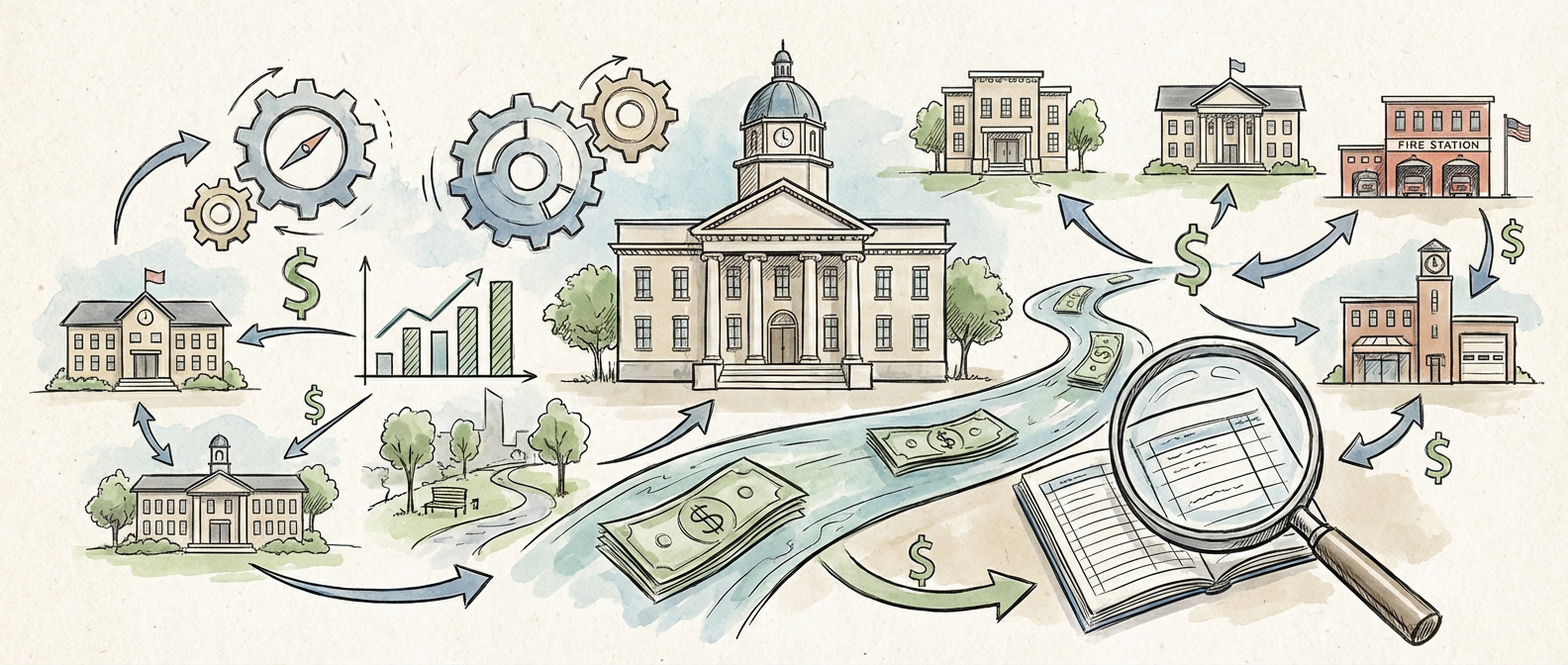
Every spring, city halls across America host the democratic equivalent of a family budget meeting, except the family includes hundreds of thousands of people and the stakes involve everything from pothole repairs to police accountability. Municipal budgets are the most tangible expression of local political priorities, yet they remain largely invisible to the very people who fund them. Understanding how to decode these documents transforms you from a passive recipient of city services into an informed participant in the democratic process that shapes your daily life.
Municipal budgets work differently than household finances or even federal spending. Unlike the federal government, cities can’t print money or run sustained deficits. They must balance their books annually, creating immediate trade-offs that reveal real political choices. When your city allocates $200 million to public safety but only $15 million to parks and recreation, that ratio tells a story about values, not just accounting. These numbers come from months of departmental requests, public hearings, and council deliberations that most residents never witness but should absolutely understand.
How cities structure their budgeting process also reflects deeper questions about governance and representation. Most cities use a mayor-council system where budget proposals flow from the executive branch to legislative review, but the details of this process matter enormously. Some mayors present take-it-or-leave-it budgets while others actually collaborate with council members. The timeline, public input mechanisms, and amendment procedures all shape whose voices get heard when money gets allocated. Learning to recognize these patterns helps you identify where citizen engagement can actually influence outcomes.

Following the Money Through Structural Channels
Revenue streams in municipal budgets reveal the underlying economic relationships that sustain city operations. Property taxes typically provide the largest chunk of general fund revenue, creating an inherent bias toward policies that maintain or increase property values. This helps explain why cities often prioritize development projects over social services, regardless of the political rhetoric surrounding budget discussions. Sales taxes add another layer, making cities dependent on consumer spending patterns that can shift dramatically during economic downturns.
Federal and state funding streams create complexity that shapes local decision-making in ways residents rarely recognize. A city might receive substantial federal grants for infrastructure improvements but face restrictions on how those funds can be used for ongoing maintenance. Grant requirements often drive program design more than community needs, creating situations where cities pursue available funding rather than optimal solutions. Understanding these funding mechanisms helps explain why local governments sometimes make seemingly counterintuitive choices about service delivery and program priorities.
The distinction between operating budgets and capital budgets creates another dynamic worth understanding. Operating budgets cover day-to-day expenses like salaries, utilities, and routine maintenance, while capital budgets fund major infrastructure projects and equipment purchases. Cities often showcase exciting capital projects while quietly cutting operating expenses that maintain existing services. This pattern reflects both the political appeal of ribbon-cutting ceremonies and the practical challenge of sustaining long-term commitments with uncertain revenue streams.
Decoding Departmental Power Dynamics
Budget allocations between city departments reflect established institutional power structures more than annual policy debates. Police and fire departments typically command large budget shares due to their essential nature and strong political constituencies, but the specific growth patterns within public safety spending reveal important trends. When police budgets consistently outpace fire department funding, or when overtime costs surge in particular departments, these patterns signal underlying operational challenges that deserve public scrutiny.
Personnel costs usually eat up 60 to 80 percent of general fund spending in most cities, making workforce decisions the primary driver of fiscal sustainability. Pension obligations, healthcare benefits, and union contract negotiations create long-term financial commitments that extend far beyond individual budget cycles. Cities facing fiscal stress often find themselves caught between maintaining service levels and managing these structural cost pressures. Understanding the relationship between current compensation decisions and future fiscal capacity helps residents evaluate the true cost of policy proposals that sound appealing in isolation.
How cities allocate discretionary spending provides the clearest window into actual municipal priorities. After covering essential services and fixed costs, cities typically have limited flexibility for new initiatives or service expansions. How they choose to use this flexible space reflects genuine political choices about community priorities. Economic development incentives, cultural programming, and social services compete for these flexible dollars, creating debates that reveal fundamental disagreements about the proper role of local government.
Infrastructure Investment and Long-Term Planning
Municipal infrastructure is one of the most complex aspects of budget analysis because the costs and benefits unfold over decades. Water systems, roads, and public buildings require massive upfront investments followed by ongoing maintenance obligations that can span generations. Cities often defer maintenance to balance current budgets, creating future fiscal burdens that dwarf the immediate savings. Learning to spot these patterns requires understanding how infrastructure assets deteriorate and what replacement costs look like over time.
Debt service obligations provide another lens for understanding municipal fiscal health and political decision-making. Cities issue bonds to finance large infrastructure projects, spreading the costs over many years but creating fixed payment obligations that constrain future budgets. The ratio of debt service to general fund revenue offers a key indicator of fiscal flexibility, while the types of projects financed through debt reveal priorities about intergenerational equity. Communities that issue debt for essential infrastructure investments face different long-term challenges than those that borrow for economic development projects with uncertain returns.
Climate change and technological evolution add new layers of complexity to infrastructure planning that most budget documents barely acknowledge. Traditional infrastructure replacement schedules assume stable environmental conditions and technological standards, but cities now face pressure to upgrade systems for climate resilience while adapting to digital transformation. These emerging needs compete with deferred maintenance on existing systems, creating fiscal pressures that require new approaches to long-term financial planning.
Transforming Analysis into Civic Engagement
Effective budget analysis should serve democratic participation rather than abstract understanding. The goal isn’t to become an expert in municipal accounting but to develop enough literacy to ask informed questions during public hearings and candidate forums. When council members propose new programs or service cuts, budget-literate residents can probe the underlying assumptions and long-term implications rather than responding solely to political rhetoric. This kind of informed engagement elevates the quality of local democratic discourse and creates pressure for more transparent decision-making.
Most cities post their budget documents online, but the presentation often obscures more than it reveals. Look beyond the glossy budget summaries to find line-item details and multi-year comparisons. Pay attention to footnotes and supplementary schedules that explain major changes or unusual accounting treatments. Compare your city’s spending patterns to similar communities to identify outliers that might warrant investigation. The municipal budget is your community’s most authentic political document, and learning to read it effectively transforms your capacity for meaningful civic participation.

Updated on March 9, 2026
The Climate Transition’s Historical Echoes: Lessons from Past Economic Transformations
When Economies Pivot: Drawing Lines from Industrial History to Climate Action
The big economic shifts in history don’t exactly roll out with trumpets and confetti. Agriculture giving way to manufacturing, the rise of the service economy, the digital revolution – they all took decades of messy policy fights, tech breakthroughs, and social chaos that probably felt completely overwhelming if you were living through them. Today’s climate transition has a lot in common with these earlier changes, except we’re trying to do it all under time pressure that makes historical comparisons both helpful and frustratingly inadequate.
The Intergovernmental Panel on Climate Change says this decade is make-or-break time for climate action, with 2030 as our deadline for keeping global warming from spiraling out of control. That timeline crams what previous economic shifts accomplished over multiple generations into basically ten years of policy scrambling. Unlike the slow mechanization of farms or the gradual rise of factories, the green transition needs coordinated action across every single sector at once while somehow not tanking the economy or tearing society apart.
History gives us reasons to be both hopeful and worried. The New Deal mobilized massive public resources and rebuilt American infrastructure in about a decade. Post-war reconstruction efforts rebuilt entire economies around new technologies and social contracts. These examples prove that rapid, comprehensive economic overhauls can work when political will meets genuine urgency. But they also show us how complicated it gets to manage these transitions without creating permanent divisions or completely screwing over vulnerable populations.
The Architecture of Carbon Pricing: Building Markets for Climate Action
Carbon pricing mechanisms now cover almost a quarter of global emissions through various national and regional schemes, creating what might be the foundation for market-driven climate action. This expansion is one of the biggest attempts to reshape economic incentives since we built international trade frameworks in the mid-twentieth century. Like those earlier efforts to create global economic institutions, carbon pricing has to coordinate wildly different national interests while actually working across different economic systems.
The European Union’s emissions trading system went first, surviving initial price swings and design problems to become a model for other regions. California’s cap-and-trade program showed how state and local governments could run sophisticated carbon markets, while China’s national emissions trading system brought the world’s biggest emitter into the global carbon pricing mix. Carbon Brief climate analysis shows these systems actually reducing emissions while generating revenue for more climate investments.
But carbon pricing by itself can’t drive the transformation we need. Historical economic transitions needed complementary policies that fixed market failures, supported displaced workers, and invested in new infrastructure. The Bretton Woods system worked not just because of exchange rate mechanisms but through coordinated fiscal policies, development assistance, and institutional reforms that created a comprehensive framework for international economic cooperation.
Industrial Policy Returns: Government as Economic Architect
Green industrial policy is back in a big way as governments in the United States, European Union, and China throw massive public investments at clean technology deployment and manufacturing capacity. This is a fundamental shift from the market-oriented policies that ruled the late twentieth century toward a much more active government role that feels like post-war development strategies. The Inflation Reduction Act, European Green Deal, and China’s renewable energy investments collectively represent hundreds of billions in public spending aimed at reshaping global energy systems.
These policies echo earlier periods when governments actively shaped industrial development through targeted investments, research funding, and infrastructure projects. The interstate highway system, space program, and internet all came from similar combinations of public investment and private innovation. Today’s clean energy initiatives follow comparable patterns, with government funding supporting basic research, demonstration projects, and market creation while private companies scale successful technologies and compete for market share.
Contemporary industrial policy operates in a much more complex global economy than its historical predecessors, though. Supply chain interdependence, international trade rules, and competitive pressures create constraints that earlier policymakers rarely had to deal with. Climate Policy Initiative research highlights how coordination between national policies determines whether they actually work, since unilateral action can lead to carbon leakage or competitive disadvantages that undermine climate goals.
Just Transition: Learning from Past Economic Disruptions
The concept of just transition acknowledges that climate policies hit communities dependent on fossil fuel industries harder than others, drawing lessons from previous economic disruptions that left entire regions behind. Coal mining communities in Appalachia, oil workers in Alberta, and automotive workers in Detroit all went through similar economic displacement as technology and policy shifts eliminated traditional jobs. These experiences inform current efforts to make sure climate action creates opportunities for affected workers and communities rather than just imposing costs.
Previous transitions offer some sobering lessons about how regional economic decline can persist when policy responses fall short. The closure of steel mills in the Rust Belt, the decline of textile manufacturing in New England, and the consolidation of family farms all created lasting social and economic disruption that outlasted the initial industrial changes. Successful transitions, by contrast, typically combined worker retraining, economic diversification, and substantial public investment in new industries and infrastructure.
Contemporary just transition efforts try to apply these lessons through programs that retrain fossil fuel workers for clean energy jobs, invest in economic diversification for dependent communities, and ensure that climate policies include provisions for affected populations. The scale and speed of the required transition create challenges that earlier policies never faced, though, as multiple industries must transform simultaneously while maintaining energy security and economic stability.
Global Cooperation and Its Discontents
International climate negotiations established a loss and damage fund for vulnerable nations at COP27, but chronic underfunding limits how much it can actually do to help smaller countries manage climate impacts they can’t handle alone. This pattern mirrors earlier international development efforts that promised comprehensive support but delivered insufficient resources to meet stated objectives. The Marshall Plan worked through sustained, substantial funding commitments, while many subsequent development initiatives struggled with inadequate financing and inconsistent political support.
Corporate net-zero commitments face increasing scrutiny for potential greenwashing, as voluntary pledges often lack the verification and accountability mechanisms necessary for credible climate action. This echoes earlier periods when corporate social responsibility initiatives promised significant changes but delivered limited results without regulatory enforcement or market pressure. The challenge is creating frameworks that align corporate incentives with climate goals while maintaining the flexibility necessary for innovation and adaptation.
The climate transition’s historical parallels illuminate both the possibilities and limitations of rapid economic transformation. Past examples show that coordinated policy action can reshape entire economies within decades, but they also reveal how important it is to address distributional consequences and maintain international cooperation throughout extended transition periods. As policymakers navigate these challenges, understanding how previous generations managed comparable transitions provides valuable perspective on the choices ahead. What aspects of historical economic transformation do you think offer the most relevant guidance for today’s climate policies?