

When Every Dollar Counted: Lessons from 1930s Municipal Finance
Picture this: It’s 1933, and your city’s tax revenue has plummeted by 40 percent while unemployment soars past 25 percent. The federal government can’t bail you out because they’re drowning in their own fiscal crisis. Sound familiar? While today’s challenges are different from the Great Depression, the municipal budgeting innovations that came out of that mess offer some surprisingly useful insights for modern civic engagement. Cities that survived and thrived during the 1930s didn’t just cut services across the board. They completely rethought how to deliver public goods with serious efficiency and community collaboration that nobody had tried before.
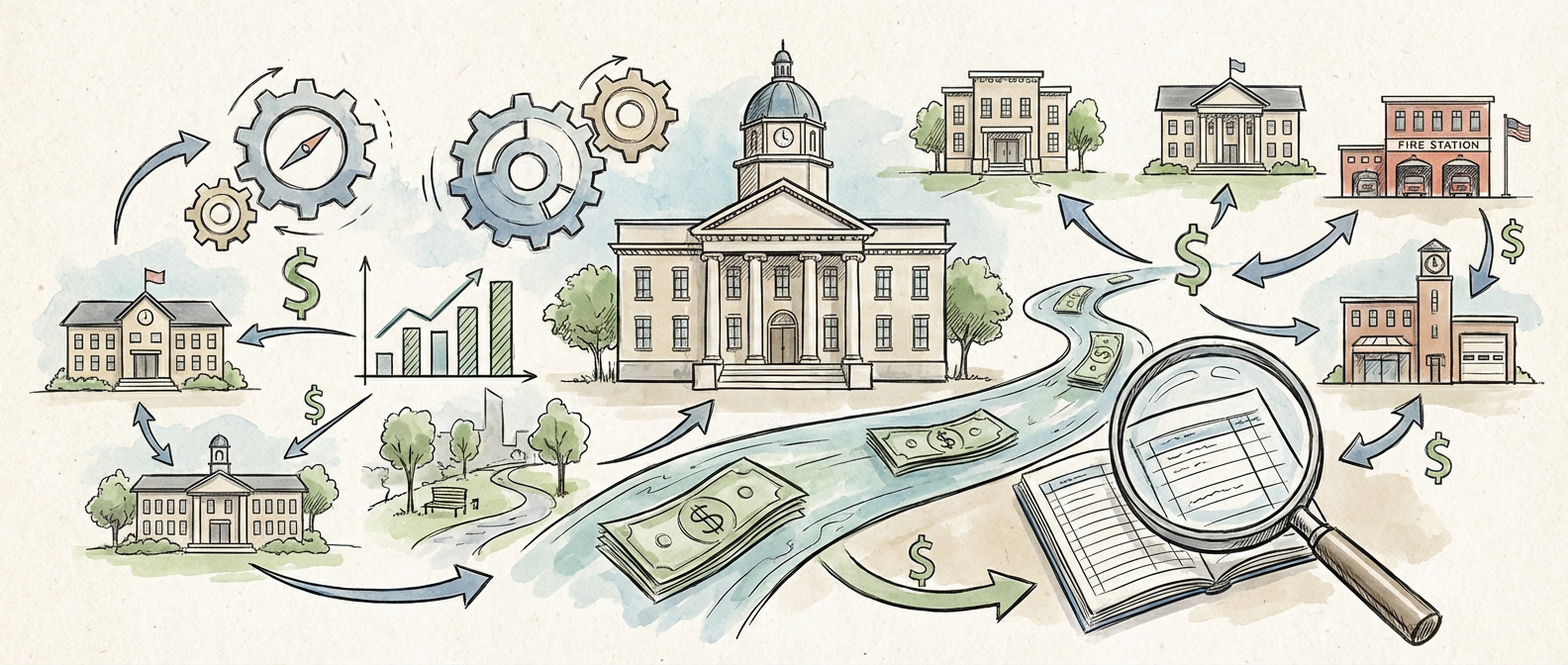
The comparison isn’t perfect, obviously. Depression-era cities operated without today’s federal mandates, union contracts, or complex regulatory frameworks. But strip away these differences, and you’ll find timeless principles of fiscal stewardship that still matter. Cities like Cincinnati and Milwaukee didn’t just get lucky during the storm. They developed systematic approaches to budget analysis, citizen engagement, and resource allocation that created lasting institutional strength. And honestly, some of their methods put modern cities to shame.

The Art of Participatory Budget Surgery
When Cincinnati faced a 35 percent revenue shortfall in 1932, City Manager Clarence Dykstra didn’t retreat to closed-door sessions with department heads. Instead, he pioneered what we might recognize today as participatory budgeting on steroids. Dykstra organized neighborhood assemblies where residents didn’t just complain about cuts but actively helped prioritize essential services. Citizens formed committees to evaluate everything from street maintenance to library hours, armed with actual budget data rather than political talking points.
This approach works because it transforms budget analysis from an abstract exercise into a real community conversation. Modern cities experimenting with similar strategies have discovered that residents often support difficult decisions when they understand the full fiscal picture. Take Portland’s recent participatory budgeting pilot: when neighborhoods received real budget authority over infrastructure improvements, they consistently chose projects that maximized community impact over individual convenience. The key insight from both eras is that transparency creates both accountability and creative problem-solving.
Today’s municipal budget documents often read like phone books written in Sanskrit. But Depression-era cities learned that survival depended on making fiscal information accessible to ordinary citizens. They created budget summaries that explained trade-offs in plain English, complete with visual comparisons that helped residents understand how their tax dollars translated into services. This wasn’t just good governance. It was political necessity when every tax increase required genuine public buy-in.
Innovation Through Constraint: The Forgotten Art of Efficiency
Scarcity forced 1930s cities to become laboratories of public sector innovation. Milwaukee’s work-sharing programs kept more city employees working by reducing hours rather than eliminating positions entirely. This preserved institutional knowledge while maintaining service delivery, something many cities today struggle with when they resort to traditional layoffs. The principle extended beyond personnel: cities learned to share equipment, coordinate purchasing, and eliminate duplicate administrative functions across departments.
The historical parallel isn’t that we should artificially constrain municipal budgets, but rather that constraint often reveals inefficiencies that abundance hides. When Detroit consolidated its scattered permit offices in 1934, they discovered that applicants had been visiting an average of four different departments for single projects. The consolidation didn’t just save money. It dramatically improved the citizen experience. Modern cities wrestling with permitting delays and bureaucratic maze-running might find inspiration in these Depression-era efficiency drives.
Perhaps most importantly, these cities learned to distinguish between cutting costs and cutting value. Slashing library hours might save money, but closing branches during peak unemployment destroyed precisely the services communities needed most. Smart cities instead found ways to maintain service levels through creative partnerships with schools, churches, and civic organizations. They discovered that community resilience often mattered more than strict departmental boundaries.
Building Financial Resilience: Beyond the Annual Budget Cycle
Depression-era cities that emerged strongest had learned to think beyond annual budget cycles toward long-term financial sustainability. They established reserve funds not just for emergencies, but for strategic opportunities. When federal work programs became available, cities with carefully maintained capital improvement plans could deploy resources immediately while others scrambled to identify shovel-ready projects.
This forward-thinking approach translated into more sophisticated debt management and revenue diversification strategies. Cities began tracking economic indicators beyond simple property tax assessments, developing early warning systems for fiscal stress. They learned that sustainable municipal finance required understanding local economic ecosystems, not just current year revenues and expenditures.
The modern equivalent might involve cities that build climate resilience into routine budget planning rather than treating environmental challenges as separate policy issues. Just as 1930s cities learned to anticipate economic volatility, today’s municipalities need budgeting frameworks that account for everything from extreme weather events to demographic shifts. The principle remains constant: resilient cities plan for uncertainty rather than hoping for stability.
Your City Budget as Historical Document
Every municipal budget tells a story about community priorities, political relationships, and long-term vision. Learning to read these documents historically reveals patterns that annual snapshots miss entirely. Does your city consistently underfund infrastructure maintenance while expanding administrative positions? Are revenue projections consistently optimistic or conservative? These patterns matter because they predict future fiscal challenges and opportunities.
The most valuable skill you can develop as a civic-minded resident is learning to ask the right questions about your city’s financial trajectory. Not just “Why are my taxes going up?” but “How does this budget position our community for the next decade?” Depression-era cities that survived had citizens who understood the difference between short-term pain and long-term gain, between necessary investment and wasteful spending.
Start by requesting your city’s budget summary and capital improvement plan. Most municipalities post these online, though you might need to dig past the press releases to find actual documents. Look for trends in debt service, infrastructure spending, and reserve fund levels. Compare your city’s fiscal indicators to similar communities. The goal isn’t to become a budget expert overnight, but to develop the analytical frameworks that turn civic engagement from emotional reaction into strategic participation.
The next time your city council discusses budget priorities, you’ll have the historical perspective to ask questions that move beyond partisan talking points toward real policy discussions. That’s exactly the kind of informed civic engagement that helps communities navigate uncertainty, whether we’re facing a 1930s-style economic crisis or the unique challenges of the 21st century. Your homework assignment, should you choose to accept it, is simple: download your city’s latest budget document and spend an hour exploring what story it tells about your community’s future.