

The Election Nobody Expected to Happen This Way
On February 23, 2025, German voters handed Friedrich Merz and his Christian Democratic Union a result that felt both inevitable and surprising. The CDU/CSU secured roughly 28.5 percent of the vote, their strongest performance in over a decade. If you’ve been paying attention to German politics, you know this wasn’t guaranteed. The party had been in a genuine fight, and the outcome reflected real choices made by millions of people at the ballot box. That matters. Democracy is supposed to feel like something that could have gone differently, and this time, it genuinely could have.
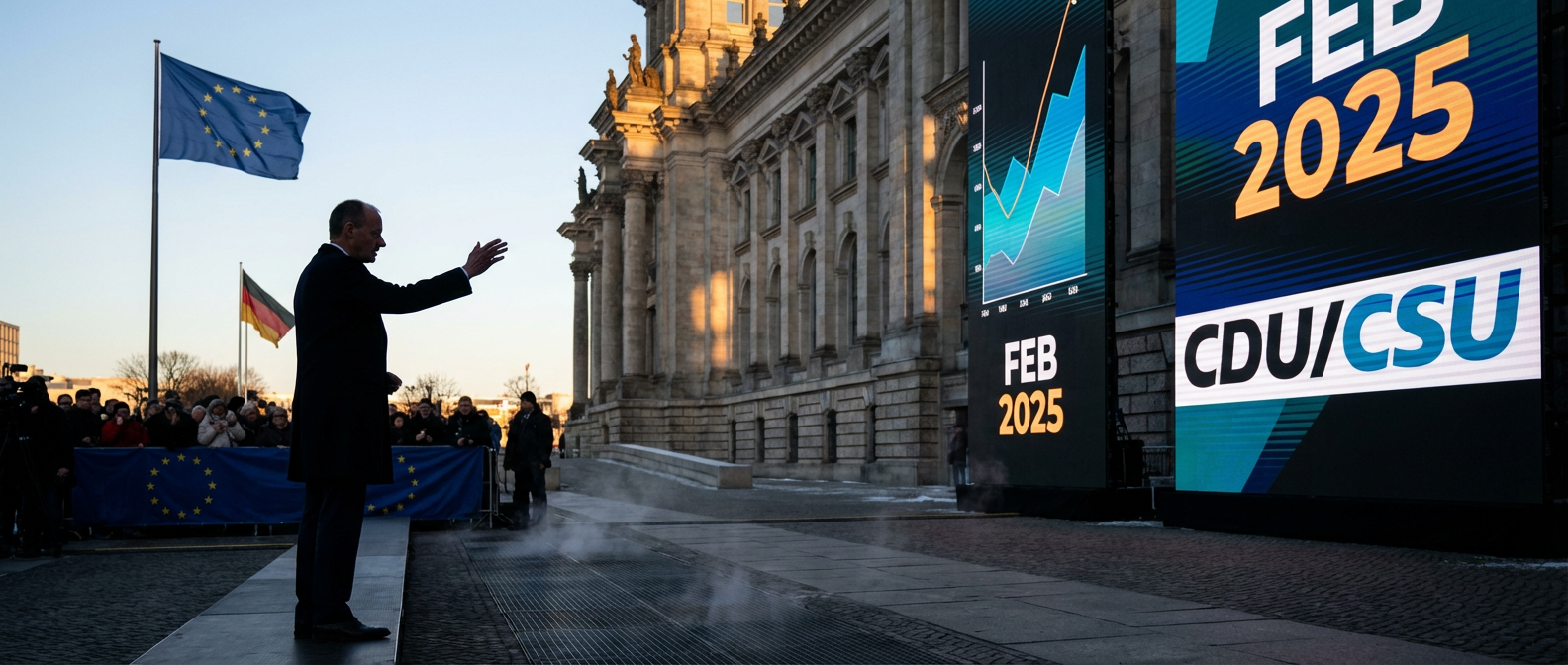
But here’s what made this election genuinely complicated, and here’s where the follow-the-money instinct kicks in: the Alternative for Germany, the AfD, finished second with approximately 20.8 percent. That’s a historic high for a far-right party in a postwar German federal election. The numbers alone tell you something about economic anxiety, migration debates, and European fragmentation. They also created an immediate structural problem. Merz couldn’t simply govern with a traditional partner. The math forced real negotiation.
The Coalition That Took Its Time
Coalition formation in Germany isn’t like a quick election night victory lap in some other democracies. It’s a process. Merz spent months negotiating with the Social Democrats, Olaf Scholz’s party, to build a governing majority. By April 2025, they had formalized their agreement, producing a coalition with 328 seats in the Bundestag. That’s a working majority, but not an overwhelming one. It’s the kind of arrangement that requires both partners to remember they need each other.
Follow the incentives here, because they’re revealing. The SPD accepted a junior coalition role after a disappointing election, which meant they had to extract real concessions in exchange for their parliamentary votes. Merz needed them badly enough that he had to make space for their priorities. That’s how coalition math works when you don’t have a landslide. Both parties walked into government knowing they’d have to compromise on infrastructure spending, welfare policy, and defense investments. Nobody got everything they wanted. That’s actually how democracy is supposed to function, and it’s worth noticing when it does.
The Constitutional Moment: When the Debt Brake Breaks
Now we get to the part that reveals something profound about European political economy. In March 2025, barely a month into the new government, Merz pushed through something extraordinary: a suspension of Germany’s constitutional debt brake. This wasn’t a minor accounting adjustment. This was one of the most sacred fiscal rules in European governance, set aside to fund a €500 billion infrastructure and defense package. You can examine Merz government’s €500 billion spending package — Deutsche Welle for the full details, but the political economy here is worth sitting with.
The German debt brake, enshrined in the constitution in 2009, was always more than fiscal policy. It was a statement about values, about discipline, about the philosophical belief that governments shouldn’t spend money they don’t have. For years, it shaped European fiscal discussions. Germany lectured southern European nations about austerity while protected by this constitutional guardrail. Now Merz, a conservative, was temporarily dismantling it. Why? Because Ukraine needed weapons. Because infrastructure was crumbling. Because NATO benchmarks were becoming geopolitical necessities rather than abstract targets.
This is where follow-the-money becomes follow-the-incentives-that-reshape-institutions. The decision tells you that geopolitical pressure, not ideology, now drives major European fiscal policy. Germany faces a genuine security threat. NATO expansion requires military investment. The United States is signaling that European allies need to spend more on defense. These material conditions created a political opportunity for Merz to do something a conservative government might have wanted to do anyway: spend significantly on infrastructure and military capacity. The coalition agreed because the SPD also understands European security concerns. The debt brake was suspended because the incentive structure changed.
The Bundestag’s New Military Trajectory
Let’s make the defense spending commitment concrete. Germany’s Bundeswehr budget is now on track to reach 3 percent of GDP by 2027. That exceeds NATO’s 2 percent benchmark. For a country that spent much of the post-Cold War era keeping its military spending deliberately constrained, this is a fundamental reorientation. The money has to come from somewhere. The coalition chose to fund it through the temporary debt brake suspension, understanding that military capacity is now a political prerequisite for German leadership in Europe.
Again, follow what this reveals about incentives. Merz, as a conservative, may have wanted higher defense spending all along. But he needed the SPD’s votes. The SPD, as social democrats, might have resisted military expansion if the security environment looked stable. Ukraine changed the calculation. Russian aggression created a coalition consensus that transcended normal left-right disagreement. The question then becomes: how long does that consensus hold? What happens when the security threat feels less immediate? These are the questions that determine whether Merz’s first 100 days represent a genuine shift in German political economy or a temporary accommodation to crisis.
What This Signals for European Politics
Step back and consider what happened in the first four months of Merz’s government. A moderate conservative won an election without a landslide. He had to negotiate. When he needed flexibility on fiscal rules, he got it because the coalition understood security required resources. Military spending increased dramatically. The debt brake, long treated as almost constitutional law, became negotiable. The far-right finished second but couldn’t govern because traditional parties still had the arithmetic and the willingness to work together.
For Europe more broadly, this signals that geopolitics is reorganizing fiscal policy faster than ideology. The consensus that emerged from Merz’s coalition isn’t primarily about left versus right. It’s about Europe’s position in a more dangerous world. Defense matters. Infrastructure investment matters. The mechanisms that constrained spending now look like luxuries Germany might not be able to afford. You can verify Germany’s 2025 election results — Federal Returning Officer to see how the vote actually broke down across regions and demographics, but the underlying story is about material conditions reshaping political possibilities.
The real question, watching from outside or inside these systems, is whether this represents a durable new equilibrium in European politics or an emergency accommodation. Will defense spending stay at these levels once the Ukraine crisis stabilizes? Will other EU members follow Germany’s lead on defense investment? Will voters eventually demand that the resources freed up by military spending go elsewhere? These aren’t academic questions. They determine whether Merz’s first 100 days mark a genuine turn in European political economy or a temporary crisis response. That’s worth paying attention to, because it affects everything from energy prices to immigration policy to your own country’s relationship with the EU. Democracy works best when citizens actually track where the money goes and why.