

The Moment When Your City Council Meeting Became Campaign Trail Politics
Remember when zoning debates belonged exclusively to the Tuesday night municipal meetings where six people showed up to argue about setback requirements? Those days are genuinely over. What started as local housing policy conversations in cities like Minneapolis and Portland has transformed into one of the most energizing organizing forces in American politics, and 2026 midterm candidates are paying very close attention.
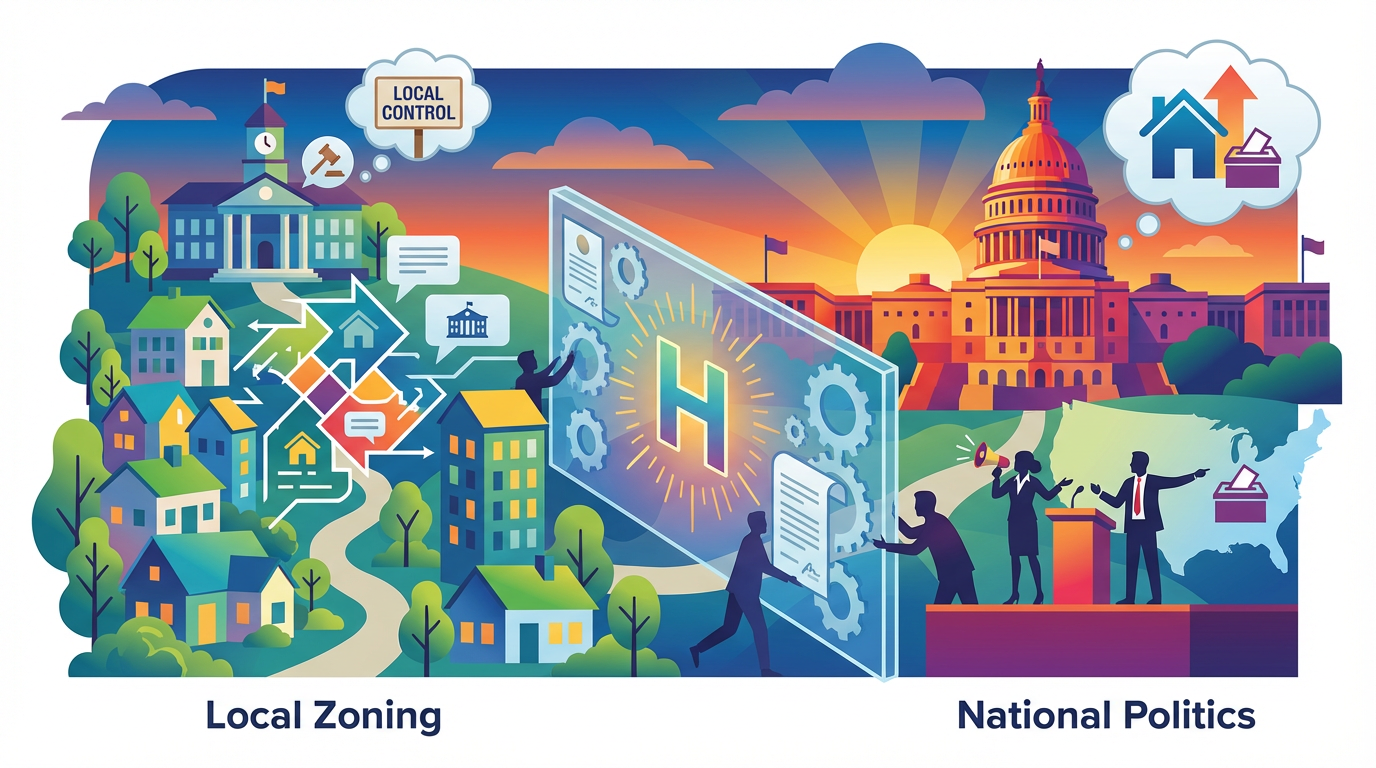
Here’s what makes this moment different from previous housing debates: for the first time in modern American politics, a supermajority of younger voters have identified housing affordability as a direct factor in how they’ll cast their midterm ballots. According to a Pew Research Center Housing Affordability Survey conducted in 2025, 67 percent of Americans under 40 indicated that housing affordability would be “very important” or “extremely important” to their 2026 voting decisions. That’s not a side issue. That’s a mobilizing force.
This wasn’t inevitable. Ten years ago, housing policy experts lamented that zoning reform couldn’t generate grassroots energy because it seemed too technical, too local, too boring. What changed wasn’t the complexity of zoning law. What changed was the lived reality becoming unbearable enough that people started paying attention to the mechanics underneath the crisis.
Understanding the Crisis: When Affordability Became a Political Emergency
Let’s establish the baseline facts, because they matter for understanding why candidates are suddenly talking about zoning at campaign rallies. According to the most recent annual report from the Harvard Joint Center for Housing Studies, housing costs consumed more than 30 percent of median household income in 22 states as of 2025. Think about what that means in practical terms: in nearly half the country, a median-earning household is spending roughly a third of their gross income on housing. That’s before taxes, food, transportation, childcare, or medical care.
For renters, the picture is often worse. For homebuyers, particularly younger ones trying to build equity, the barrier has become nearly insurmountable in major metropolitan areas. This isn’t abstract economic data. This is why your 28-year-old cousin moved back with her parents. This is why your nephew is considering a job opportunity in another state. This is why housing has become the emotional center of so many political conversations.
The affordability crisis doesn’t exist in a vacuum. It exists because of specific policy choices that communities made, often decades ago, and that continue to shape housing supply today. Single-family zoning ordinances, minimum lot sizes, parking requirements, and density restrictions weren’t natural phenomena. They were deliberate regulations adopted by municipalities, often for explicitly exclusionary reasons. Understanding this matters because it means the solutions exist within reach of local democratic action.
The Policy Shift: How Zoning Reform Moved from Niche Cause to Mainstream Campaign Issue
What’s fascinating about the 2025-2026 political moment is watching how zoning reform moved from a policy conversation among housing advocates into genuine campaign territory. The Biden administration’s pro-housing executive actions from earlier in the decade weren’t abandoned. If anything, early 2025 federal housing policy discussions expanded on that framework, with HUD proposing $12 billion in incentives specifically designed to reward jurisdictions that eliminate single-family-only zoning restrictions. That’s real money with real teeth.
But the federal carrots only work if state and local governments cooperate. Enter the state-level preemption movement, which has become one of the most consequential and contentious developments in American federalism. Montana, Florida, and Texas all passed significant state-level zoning preemption laws between 2023 and 2025, effectively overriding local exclusionary zoning ordinances. These weren’t quiet technocratic reforms. They became genuine political battles that split communities, challenged traditional local control arguments, and created strange political coalitions.
What matters for the 2026 midterms is that these state battles proved something important: housing policy generates voter engagement. People care about whether their state legislature is empowering or restricting their city’s ability to build. They pay attention to whether their representatives support or oppose zoning reform. They remember who sided with them during these fights.
The Evidence That Works: Why Minneapolis Matters More Than You Might Think
When Minneapolis eliminated single-family zoning citywide in 2019, local housing activists celebrated. National housing policy experts noted it with interest. But the real significance emerged in the years that followed, when the data started telling a story. According to University of Minnesota research tracking outcomes through 2024, Minneapolis saw a 12 percent relative decrease in rent growth compared to peer cities during that same period.
That 12 percent might not sound dramatic until you calculate what it means in actual dollars. For a renter in an equivalent city paying $1,500 monthly in 2024, that differential represents roughly $180 monthly, or more than $2,000 annually. For someone living paycheck to paycheck, that’s the difference between stability and precarity. For a political candidate, it’s an actual policy win you can point to and say: “This works. We did this. Here’s the evidence.”
Minneapolis matters because it transformed zoning reform from theory into practice. Other cities started taking it seriously. Developers had actual experience with how reformed zoning functioned. Housing advocates had proof that incremental supply increases actually affected market dynamics. Skeptics had to engage with evidence rather than speculation.
What This Means for 2026: The Campaign Architecture Takes Shape
Here’s what’s building for 2026: candidates at every level from city council to Congress will be running on housing policy platforms with more specificity and technical detail than American voters typically encounter in campaign messaging. That’s not boring anymore because housing costs are existential to too many households.
The fault lines are forming along predictable but important dimensions. Some candidates will run on aggressively expanding housing supply through zoning reform, density increases, and regulatory streamlining. Others will emphasize preservation of neighborhood character, tenant protections, and community stability. Still others will try to split the difference by supporting market-rate development while protecting affordable housing stocks. None of these positions are illegitimate, but they reflect genuinely different values and different constituencies.
What’s changed is that these aren’t niche positions anymore. A candidate in a competitive district can no longer avoid having a clear housing platform. Their opponent will force the issue. Voters will demand specificity. Local endorsements from housing advocacy organizations will carry real weight in candidate evaluation.
The mechanics of this shift are worth understanding, not because they’re entertaining political theater (though they often are), but because they illustrate how democracy actually works when enough people care about something concrete enough to make it impossible to ignore. Housing policy became a campaign-defining issue not because political consultants decided it should, but because the lived experience of housing insecurity finally became urgent enough that voters made politicians respond.
If you want to understand where your local candidates stand on housing, you know what to do. Attend forums. Ask specific questions about zoning, density, and supply. Read their answers carefully. Talk with your neighbors about which candidates align with your values on these questions. Then organize. This is what civic engagement actually looks like when it matters.