

When Ordinary People Discovered Their Political Power
In the winter of 1772, something extraordinary happened in Boston. A group of frustrated colonists, tired of waiting for distant authorities to address their grievances, decided to take matters into their own hands. They formed what they called “committees of correspondence” – networks of ordinary citizens who met regularly to discuss local issues, share information, and coordinate action. These weren’t professional politicians or wealthy merchants running the show. These were shopkeepers, artisans, and farmers who discovered that democracy worked best when they showed up.
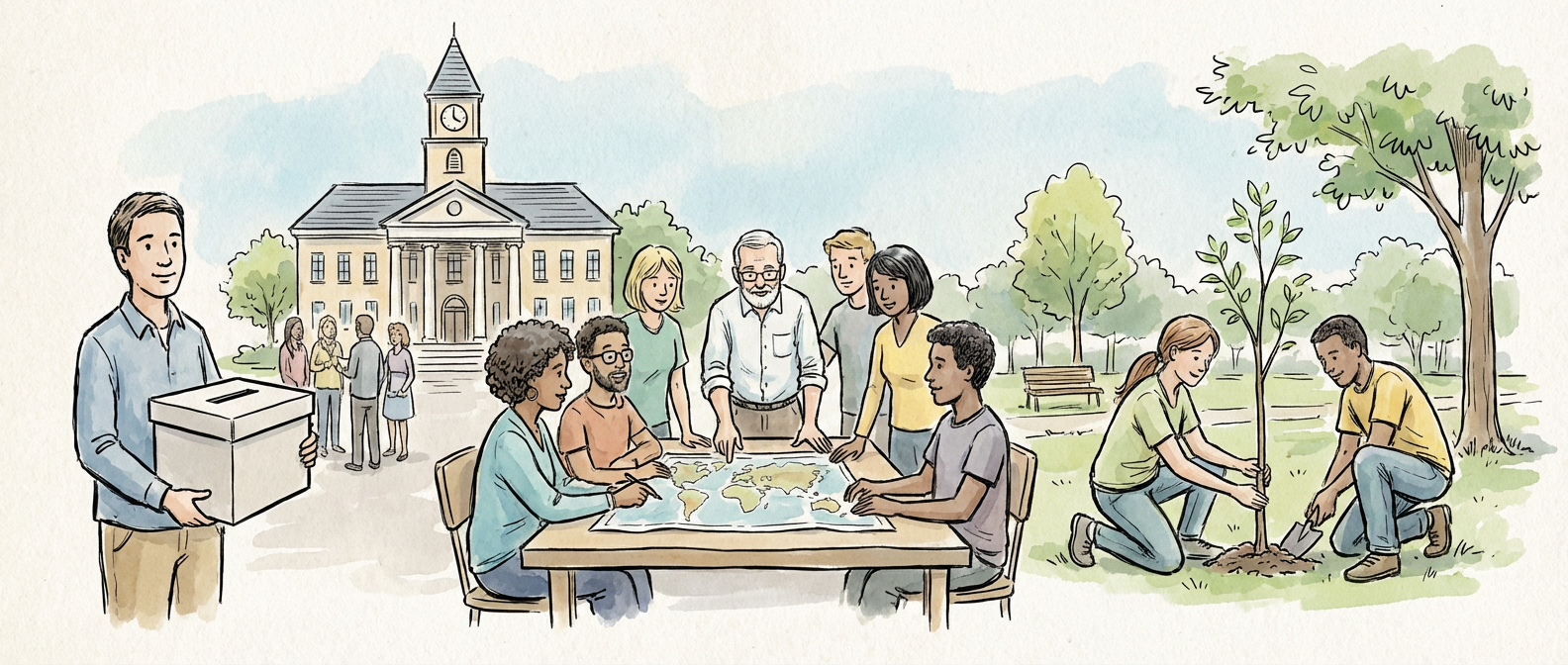
What I find most compelling about this moment for modern civic engagement isn’t just the revolutionary outcome. It’s how these early Americans figured out the mechanics of collective action. They started with the basics: identifying problems in their immediate community, researching the facts, and building relationships with like-minded neighbors. Samuel Adams, the master organizer behind much of this activity, understood something that today’s civic beginners should remember. Real political change doesn’t begin with grand gestures or viral social media posts. It begins with people willing to show up consistently to the unglamorous work of local democracy.
The committees of correspondence spread from town to town not because they had sophisticated technology or unlimited resources, but because they addressed a fundamental human need: the desire to have a voice in decisions that affect your daily life. When we look at civic engagement today, we can see echoes of this same impulse. People want to influence their children’s schools, improve their neighborhoods, and ensure their local government responds to their concerns. The tools have evolved, but the underlying motivation is remarkably similar.

The Anatomy of Effective Grassroots Organization
Those colonial committees succeeded because they mastered three core elements of civic engagement: information, organization, and sustained action. First, they made it their business to understand how local government actually worked. Committee members studied town charters, attended public meetings, and maintained detailed correspondence about policy decisions. They didn’t just react emotionally to problems. They researched solutions and understood the mechanisms for implementing change.
Second, they built networks that extended beyond their immediate social circles. A successful committee of correspondence included people from different economic backgrounds, various professions, and multiple neighborhoods. This diversity wasn’t accidental; it was strategic. When you’re trying to influence policy, you need coalition partners who can reach different constituencies and bring varied expertise to your cause. The Boston committees understood that a blacksmith’s concerns about taxation might differ from a merchant’s, but both perspectives strengthened their overall argument.
Third, they committed to long-term engagement rather than episodic activism. These weren’t groups that formed in response to a single crisis and disbanded once the immediate threat passed. Committee members met regularly for years, building institutional knowledge and maintaining relationships even during quiet periods. This consistency gave them credibility with local officials and allowed them to respond quickly when urgent issues arose. Modern civic engagement often fails because people expect immediate results and lose interest when change takes time. It’s frustrating, but that’s how democracy works.
From Colonial Committees to Modern City Council Meetings
The structure of those 18th-century committees offers a surprisingly relevant blueprint for today’s civic beginners. Consider how you might apply their approach to a contemporary local issue, perhaps advocating for better bike lanes in your city. Like the colonists, you’d start by researching how transportation decisions get made in your community. Who sits on the planning commission? When does the city council review transportation budgets? What’s the process for public input on infrastructure projects?
Next, you’d identify allies who share your interest in bike safety but might approach the issue from different angles. Parents worried about children’s routes to school, business owners interested in attracting cycling customers, health advocates promoting active transportation, and environmental groups supporting alternatives to car transportation. Each group brings different credibility and connections, just as those colonial committees benefited from including both religious leaders and tavern keepers.
The sustained engagement piece requires patience and strategic thinking. You might start by attending city council meetings regularly, not just when bike lane issues are on the agenda, but consistently enough that council members recognize you as a knowledgeable community voice. You’d build relationships with city staff who work on transportation planning. You’d organize informal information-sharing sessions in your neighborhood, similar to how committee members gathered in homes and public spaces to discuss colonial governance.
The historical parallel has its limits, of course. Colonial committees operated in smaller, more homogeneous communities where face-to-face relationships carried more weight. Today’s civic engagement happens in more diverse, complex governmental systems where bureaucratic processes can feel impenetrable. Social media creates new opportunities for organizing but also new challenges around information quality and maintaining focus. Still, the fundamental insights about research, coalition-building, and persistence are remarkably applicable.
Building Your Own Committee of Correspondence
Starting your civic engagement journey doesn’t require you to organize a revolution, though the colonists would remind us that meaningful change often starts with modest local action. Begin by identifying one specific issue that affects your daily life and commit to understanding how your local government addresses that type of problem. This might mean attending school board meetings if you’re concerned about education, or city planning sessions if you’re interested in housing development.
Pay attention to who else shows up to these meetings and what concerns they raise. Effective civic engagement requires you to understand the broader ecosystem of local politics, including issues that might not directly affect you but matter to your neighbors. The person advocating for senior center funding and the person pushing for youth sports programs might seem to have competing priorities, but both care about community investment. That’s a connection worth exploring.
Start building relationships before you need them. Introduce yourself to other regular attendees at public meetings. Follow up on interesting points raised during public comment periods. Join local organizations, even ones that focus on issues adjacent to your primary concern. The colonial committees succeeded partly because members knew each other through multiple connections: professional relationships, religious congregations, neighborhood ties. These overlapping networks created trust and facilitated cooperation when urgent action was needed.
Effective civic engagement requires both idealism and pragmatism. Those 18th-century organizers believed passionately in their cause, but they also understood timing, compromise, and incremental progress. They celebrated small victories while keeping sight of larger goals. They maintained hope while acknowledging setbacks. Most importantly, they showed up consistently, meeting after meeting, year after year, until their persistent presence became a recognized force in local decision-making.
The committees of correspondence ultimately helped launch a nation, but they started with neighbors talking to neighbors about problems they could see from their front doors. Your own civic engagement might not reshape world history, but it can absolutely reshape your community. The question isn’t whether you have enough influence to matter. It’s whether you’re ready to start building that influence, one meeting, one conversation, one small action at a time.