

Why the Sprint Approach Burns Out the Best Advocates
I’ve watched countless passionate people flame out of political advocacy after treating it like a crisis response instead of a marathon. They’ll throw themselves into a single campaign with the intensity of a house fire, working eighteen-hour days, checking election results every five minutes, and treating every setback as a personal catastrophe. Six months later, they’re done. Completely done. And that’s exactly the opposite of what our democracy needs.
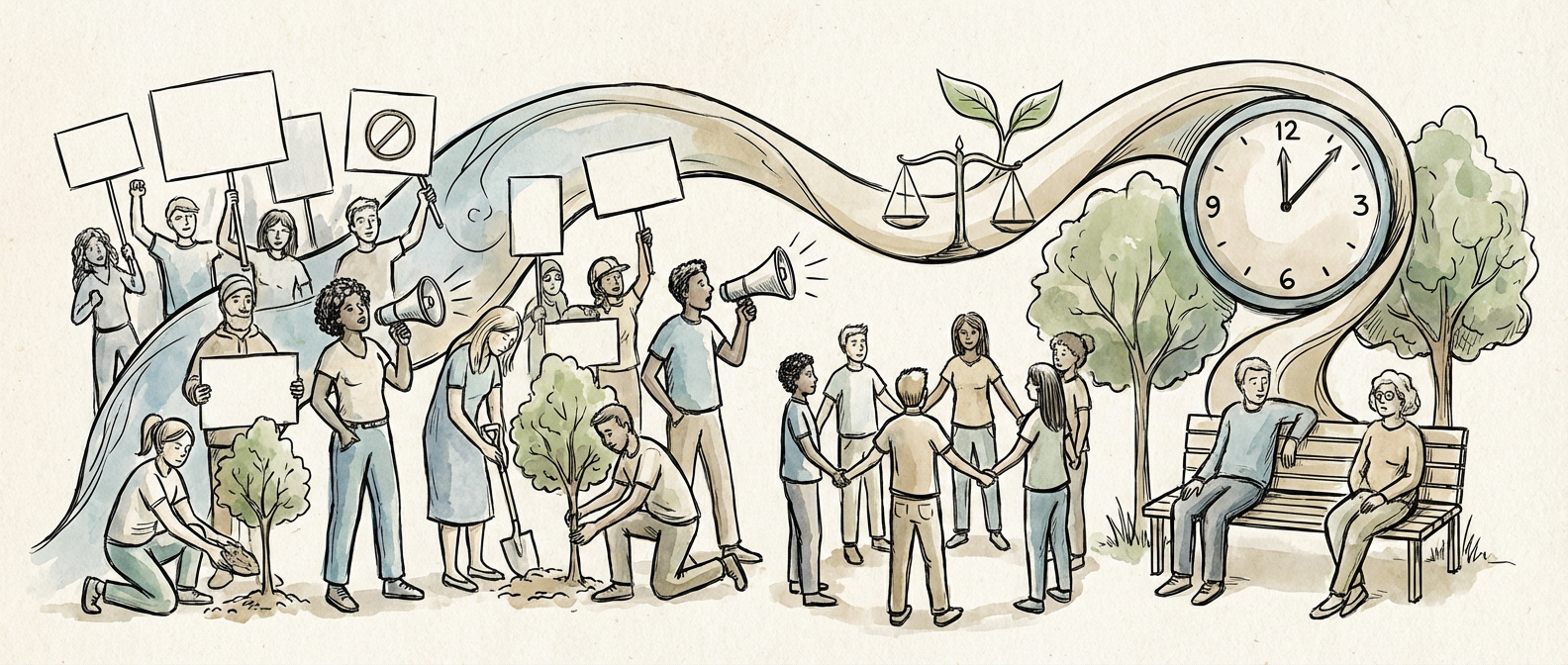
The most effective advocates I know treat political engagement like tending a garden, not fighting a war. They get that real change happens through consistent, deliberate action over years, not frantic bursts of activity that leave them exhausted and cynical. This isn’t about lowering your standards or caring less. It’s about building systems that let you care effectively for the long haul.
Think about it this way: if you burn out after one election cycle, you’ve basically removed yourself from twenty or thirty future opportunities to make a difference. The politicians and lobbyists who shape policy aren’t going anywhere. They’re planning their influence campaigns in terms of decades. Shouldn’t we match that timeline with our own sustained engagement?

The Power of Choosing Your Battles Strategically
Effective advocacy starts with honest assessment of your capacity and strategic thinking about where you can have the most impact. I learned this lesson watching a friend try to simultaneously campaign for three different candidates, volunteer for two ballot initiatives, and organize neighborhood climate action meetings. She was passionate about all these causes, but spreading her efforts so thin meant she wasn’t particularly effective at any of them.
The solution isn’t caring about fewer things. It’s understanding the difference between staying informed and actively engaging. You can follow twelve different issues while choosing to put your volunteer hours and political capital behind two or three where your specific skills and local knowledge give you an advantage. Maybe you’re particularly good at research and writing, which makes you valuable for candidate vetting and voter guides. Maybe your professional background helps you understand housing policy better than most, making you an effective advocate when those issues come before your city council.
This strategic approach also means recognizing when other people and organizations are already doing excellent work on an issue you care about. Instead of starting from scratch, you can amplify their efforts through your networks, donate to support their work, or offer specific skills when they need help. This multiplies your impact while preserving your energy for the areas where you’re uniquely positioned to lead.
Building Advocacy Into Your Existing Routines
The most sustainable political engagement happens when it becomes part of your regular rhythm rather than an extra burden on top of an already full life. This means finding small, consistent actions that fit naturally into patterns you’ve already established.
Look at your information consumption habits first. Instead of doom-scrolling through national political news that you can’t directly influence, dedicate that same twenty minutes to following your local government’s agendas and decisions. Sign up for your city council’s meeting notifications. Follow your school board members on social media. Read your local newspaper’s government coverage, and if they don’t cover local government well, think about what you might do to fill that gap in your community.
Turn your existing social connections into advocacy opportunities without being annoying about it. When friends ask for restaurant recommendations, you can mention which businesses in your area actively support workers’ rights or environmental initiatives. When neighbors complain about potholes or inadequate public transit, you can share information about how to report infrastructure problems effectively or when the relevant budget discussions happen at city hall. You’re not lecturing anyone. You’re simply being the person who knows how things actually work.
Monthly or quarterly advocacy check-ins work better than daily political engagement for most people’s sustainability. Set aside two hours every few months to research upcoming local elections, review your representatives’ recent voting records, and pick one concrete action you can take to influence an issue you care about. This might mean writing one well-researched letter to your state legislator, attending one city council meeting, or having one substantive conversation with a friend who’s thinking about running for local office.
Making Your Advocacy Count Where It Matters Most
Local and state politics offer the best return on investment for individual advocates, but they’re often overlooked because they seem less dramatic than federal politics. This is a huge strategic mistake. Your vote carries exponentially more weight in local elections, where margins of fifty or a hundred votes regularly determine outcomes. Your voice has real impact in city council meetings where three people showing up to speak on an issue constitutes significant public engagement.
State-level advocacy deserves particular attention because state governments make most of the decisions that directly affect daily life: education funding, healthcare access, housing policy, criminal justice, and environmental protection. State legislators typically represent far fewer people than federal representatives, which means your individual contact carries more weight. A well-timed email or phone call to your state representative about legislation that’s still in committee can genuinely influence their vote.
Focus on building relationships with local officials and their staff rather than just contacting them when you want something. Attend town halls and candidate forums during non-election years. Follow up with thank-you notes when they take positions you support. Introduce yourself at community events. These relationships matter enormously when you need to advocate for specific policies later, because you’re no longer a random constituent. You’re someone they recognize as a thoughtful, engaged community member.
Creating Systems That Support Long-Term Engagement
Sustainable advocacy means treating your political engagement like any other important area of your life: with systems, boundaries, and realistic expectations. Start by defining what success looks like for you personally. Maybe it’s staying informed about local issues and voting in every election. Maybe it’s volunteering for one candidate per election cycle. Maybe it’s attending city council meetings monthly and providing public comment twice a year. Whatever level feels sustainable given your other commitments, define it clearly and stick to it.
Build in regular breaks and limit your consumption of political news that you can’t act on. Set specific times for checking political updates rather than letting them interrupt your day constantly. Create physical and temporal boundaries around your advocacy work so it doesn’t consume your relationships or mental health. The goal is staying engaged enough to be effective without becoming so consumed that politics damages your well-being or your connections with people who don’t share your exact views.
Connect with other people who share your commitment to sustained engagement rather than just your policy positions. The most valuable political relationships are often with people who understand the importance of consistent civic participation, even when you disagree on specific candidates or approaches. These relationships will sustain you through difficult election cycles and help you maintain perspective when individual setbacks feel overwhelming.
Remember that building a more responsive democracy is generational work. Your goal isn’t to solve every problem or win every battle. Your goal is to stay engaged and effective long enough to train the next generation of advocates while continuing to push for progress on the issues that matter most to your community. That’s work worth doing, and it’s work that deserves sustainable approaches that honor both your commitment and your humanity.