

The Catalyst Moment: When Personal Problems Meet Public Systems
Every transformative neighborhood movement begins with what organizers call “the moment of recognition” – that instant when residents realize their individual frustrations are actually shared experiences rooted in systemic failures. The pothole that damages your car becomes meaningful when you discover it’s part of a citywide infrastructure budget crisis. The speeding traffic on your street gains political weight when you learn that traffic calming measures exist but require formal petitions to trigger action.
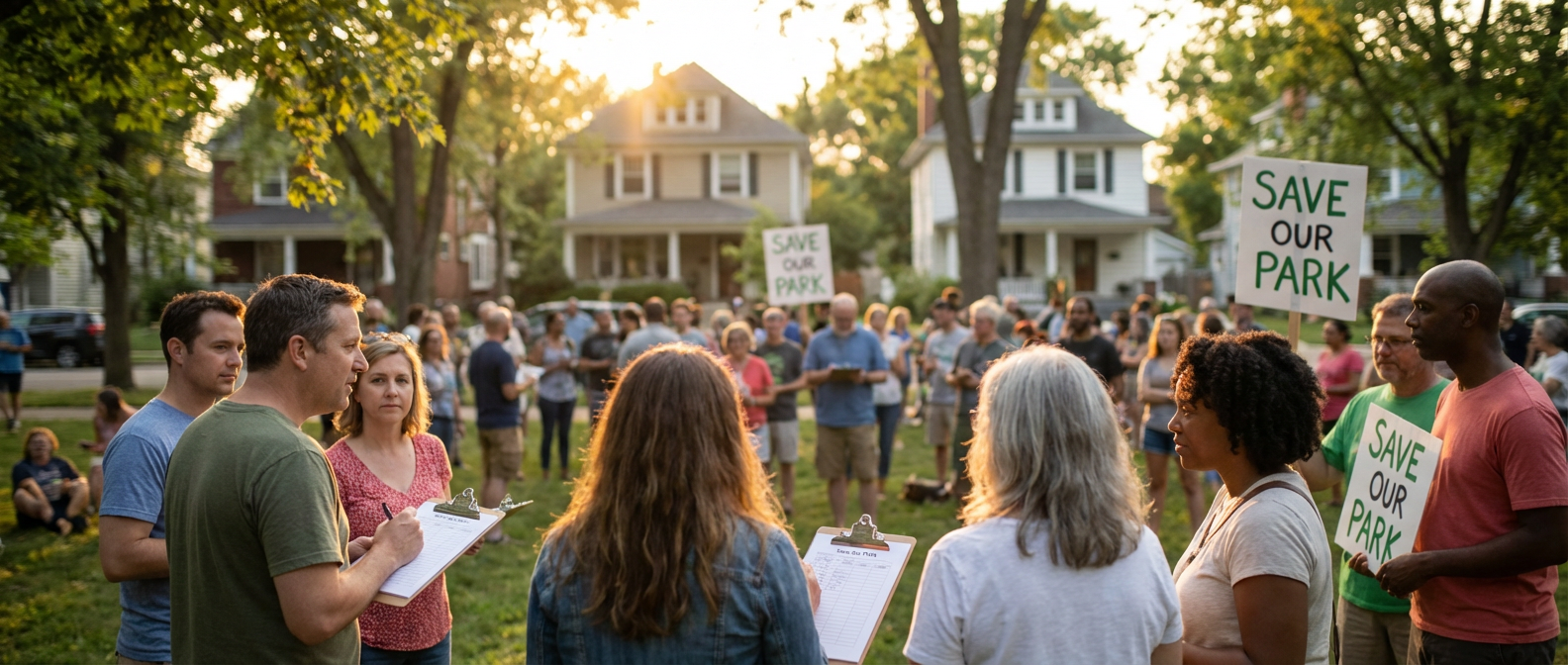
This recognition phase follows predictable patterns across different communities and issue types. Research from the National Civic League shows that successful neighborhood mobilization typically emerges when three conditions align: a visible problem affecting multiple households, accessible information about potential solutions, and at least one resident willing to invest time in understanding the governmental processes involved. When any of these pieces are missing, obvious problems often never generate organized responses. It’s frustrating, but it happens all the time.
What makes this moment particularly powerful is its educational function. Residents who previously viewed local government as distant and bureaucratic suddenly discover the specific departments, budget lines, and decision-making processes that directly impact their daily lives. A noise complaint turns into an education about zoning enforcement procedures. A concern about park maintenance becomes a crash course in municipal budget cycles and capital improvement planning.

Information Networks and the Democracy of Expertise
Successful neighborhood mobilization depends on creating what sociologists call “bridging social capital” – connections that link residents to information, resources, and decision-makers beyond their immediate social circles. This process often begins with one or two residents who have what you might call “civic literacy.” They understand how local government functions, know when public meetings happen, are familiar with records requests, and have a handle on what elected officials actually do.
These civically literate residents become crucial translators. They convert complex governmental processes into accessible action steps for their neighbors. They know that zoning variances require public hearings, that budget hearings happen on specific dates, and that city council members respond differently to phone calls versus emails versus appearances at public meetings. More importantly, they understand the timelines involved. They know that meaningful input on next year’s budget must happen months in advance, not after problems have already materialized.
The democratization of this expertise is one of the most significant aspects of neighborhood organizing. As residents engage with issues affecting their community, they develop their own civic literacy and become capable of mentoring others through similar processes. This creates sustainable capacity for ongoing engagement rather than one-time mobilization around single issues. It builds something that lasts.
The Mechanics of Collective Action: From Complaint to Campaign
Transforming individual concerns into collective action requires specific organizational structures that can channel energy effectively while maintaining momentum over extended periods. Successful neighborhood movements typically evolve through distinct phases: problem identification, information gathering, stakeholder mapping, strategy development, and sustained engagement with formal political processes.
The stakeholder mapping phase proves particularly important because it reveals the multiple decision points within local government systems. A single neighborhood issue might involve the planning department, public works, the city council, county commissioners, state agencies, and various appointed boards or commissions. Understanding these relationships helps residents direct their efforts toward the most effective intervention points rather than exhausting themselves through misdirected advocacy.
Strategy development requires balancing immediate tactical needs with longer-term relationship building. Effective neighborhood organizations learn to work simultaneously on multiple timelines. They address urgent problems that demonstrate responsiveness to residents’ immediate concerns while building the political relationships and institutional knowledge necessary for more complex policy changes. This dual-track approach helps maintain resident engagement while developing the sustained power necessary for systemic change.
Institutional Interfaces: Navigating Formal Political Structures
The most sophisticated neighborhood movements understand that lasting change requires engaging with formal political institutions rather than simply pressuring them from the outside. This means learning to speak the language of municipal governance, understanding budget processes, and developing relationships with staff members who implement policies on a daily basis. Successful groups invest time in understanding the difference between policy development, budget allocation, and program implementation. Each phase offers different opportunities for influence.
Effective institutional engagement also requires understanding the political incentives facing elected officials and administrative staff. City council members respond to different types of pressure depending on their electoral circumstances, committee assignments, and policy priorities. Administrative staff members operate within bureaucratic constraints that shape their ability to respond to resident concerns. Recognizing these realities allows neighborhood groups to craft strategies that work with institutional logic rather than against it.
The most impactful neighborhood organizations eventually become ongoing participants in local governance rather than episodic advocates for specific issues. They develop regular communication channels with relevant departments, establish representatives who attend relevant board meetings, and create systems for monitoring implementation of policies they helped develop. This sustained engagement capacity transforms them from reactive problem-solvers into proactive community builders.
Building Democratic Infrastructure: Beyond Single Issues
The ultimate measure of successful neighborhood mobilization lies not in solving individual problems but in creating lasting democratic infrastructure that enables ongoing civic participation. This infrastructure includes both formal elements like regular meetings, communication systems, and leadership development processes, and informal elements like networks of trust, shared civic knowledge, and collective efficacy beliefs among residents.
Communities that develop robust democratic infrastructure become capable of addressing multiple issues simultaneously and responding quickly to new challenges as they emerge. They create what political scientists call “civic capacity” – the ability to identify problems, develop solutions, and implement changes through collaborative engagement with formal political institutions. This capacity proves particularly valuable during crisis periods when rapid response and creative problem-solving become essential for community survival.
Perhaps most importantly, neighborhoods with strong democratic infrastructure become training grounds for broader civic engagement. Residents who cut their teeth on local zoning fights often become candidates for school boards, planning commissions, and city councils. They carry forward both practical organizing skills and deeper appreciation for the complexities of democratic governance, strengthening political institutions at multiple levels.
The architecture of neighborhood change reveals democracy’s most fundamental promise: that ordinary people can shape the conditions of their daily lives through sustained collective action. If you’re curious about how this plays out in specific contexts, I’d encourage you to attend your next city council meeting or planning commission hearing. You don’t need to advocate for any particular position. Just observe the machinery of local democracy in action. You might be surprised by what you discover about both the possibilities and the practical challenges of democratic participation.