

The Scale of Catastrophe We’ve Learned to Ignore
Two years into Sudan’s civil war, we’ve reached a threshold that should terrify anyone who believes in international institutions. On April 15, 2023, fighting erupted between the Sudanese Armed Forces and the Rapid Support Forces, a paramilitary group with deep roots in the Darfur conflict. By early 2025, this war had displaced more than 11 million people within Sudan’s borders. To put that number in perspective: that’s roughly the population of Belgium or Greece, forced from their homes not by natural disaster but by deliberate human choice. According to UNHCR data, this is now the world’s largest internal displacement crisis. The previous holder of that grim title was Syria. We know what Syria taught us about the limits of international concern.
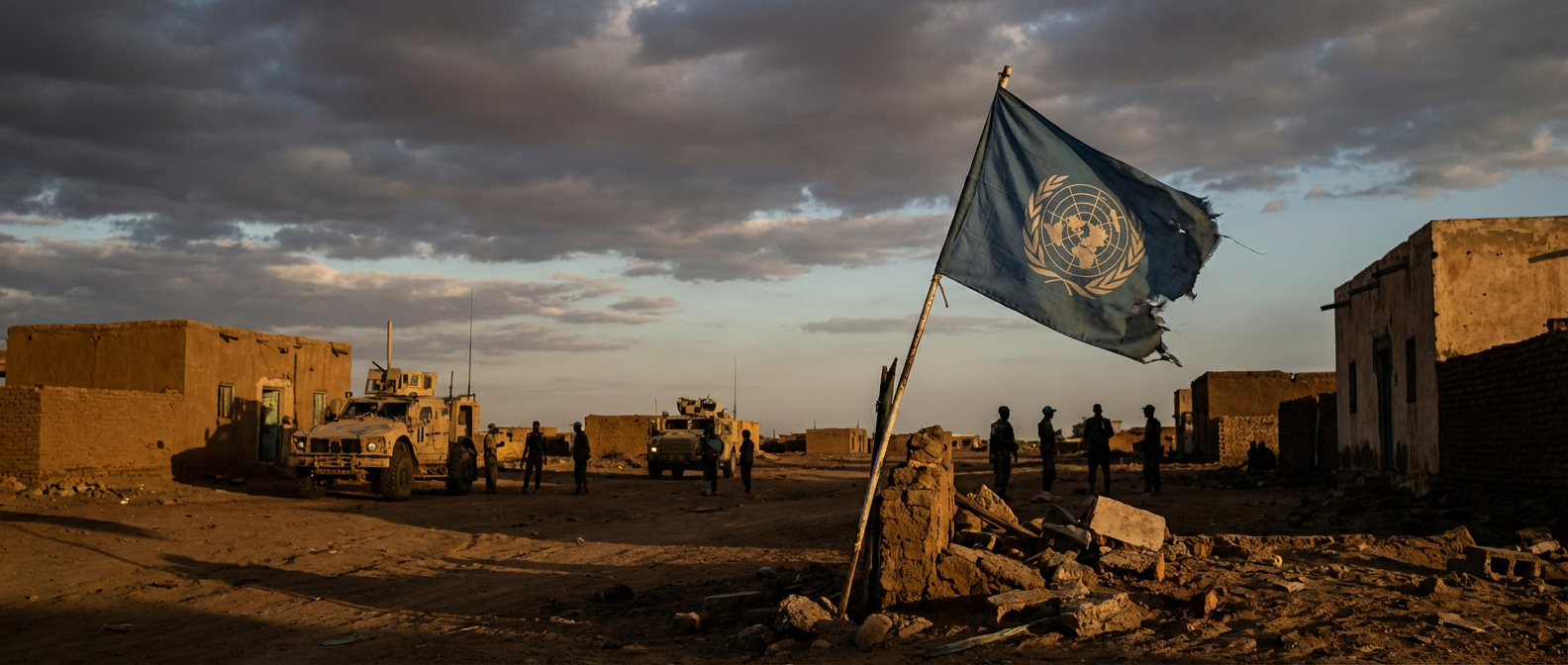
What strikes me most about covering this moment is how familiar the machinery of failure has become. I’ve spent years studying how democratic institutions decay, how checks and balances erode when people stop insisting they matter. The international response to Sudan feels like watching that same process unfold at a global scale, just faster and with higher stakes. There’s a particular sadness in recognizing the pattern.

The Funding Gap as Political Statement
Let’s talk about money, because money is where political commitment reveals itself most clearly. The UN Office for the Coordination of Humanitarian Affairs developed a 2024 response plan for Sudan’s humanitarian emergency. They identified what they needed: $2.7 billion. What arrived? $1.4 billion. That 48% funding gap isn’t a bureaucratic inconvenience. It’s a body count waiting to happen. When you can’t purchase food, medicine, and water purification systems, people starve. People die of preventable disease. Children never learn to read.
I’ve worked with community organizations that faced similar shortfalls. I’ve watched them make impossible choices about who gets served and who doesn’t. The difference is that a local food bank serves a city. The UN’s Sudan operations serve tens of millions. The moral weight is almost incomprehensible. What’s particularly striking about this specific failure is that it wasn’t an act of God or an economic impossibility. Wealthy nations chose not to fully fund the response. They made a calculation that Sudan mattered less than other demands on their budgets. You can check the UN OCHA Sudan Humanitarian Response Plan documents yourself and see exactly what assistance was planned and what fell away.
The Security Council’s Theater of Paralysis
Here’s where the institutional failure becomes almost Shakespearean. The UN Security Council exists, in theory, to coordinate responses to threats to international peace and security. Sudan qualified. A binding ceasefire resolution should have been a basic function of that body in 2024. Instead, the Security Council failed to pass one. Russia and China vetoed or abstained on substantive action. These aren’t mysterious decisions. Both nations have strategic interests in Sudan and a permanent seat at the table. The system designed to prevent great powers from blocking humanitarian action became the weapon that enabled them to.
This echoes the deadlock on Syria, which in turn echoes the paralysis on Rwanda before it. Historical parallels have limits, I know that. The contexts differ. The players have different relationships to the conflicts. But the pattern is real: permanent Security Council members use their veto power to protect allies or advance geopolitical interests, and civilians pay the price. The question isn’t whether this will happen again. It’s whether we’ll finally acknowledge that a system this broken needs fundamental reform.
Famine and the Collapse of Prevention
In August 2024, the Integrated Food Security Phase Classification made a formal declaration. Famine conditions existed in the Zamzam displacement camp in North Darfur. This was the first famine declaration anywhere on Earth since Somalia in 2022. Think about what that means: we have systems designed to prevent famine. We have early warning indicators. We have humanitarian organizations positioned to respond. And yet famine happened anyway. That’s not a failure of knowledge or capability. That’s a failure of will.
The Zamzam camp housed some of Sudan’s most vulnerable people. They were already displaced. They were already dependent on external aid. The conditions that produced famine didn’t materialize overnight. They accumulated, week by week, as funding failed to arrive and political will evaporated. Visit UNHCR Sudan Emergency Situation Updates and you’ll see the historical timeline. The warning signs were visible. What was missing was the response.
Justice Without Enforcement: The ICC’s Hollow Victory
In 2024, the International Criminal Court issued an arrest warrant related to atrocities committed by forces linked to the Sudanese Armed Forces in Darfur. This should have been significant. The ICC exists to prosecute crimes against humanity, war crimes, and genocide. An arrest warrant is precisely what that institution is designed to produce. But here’s the catch that makes you understand why reform advocates are so urgent about these institutions: the ICC has no police force. It has no army. It depends on member states to arrest suspects and turn them over. Sudan hasn’t complied. The international community hasn’t forced the issue. The warrant sits like a beautiful principle with no power behind it.
It reminds me of something a mentor once told me about local government: a policy that can’t be enforced isn’t a policy, it’s a suggestion. The same applies here, just at a continental scale. The ICC did its job. The international system failed to back it up.
What Reform Actually Looks Like
So what does this mean for the future of UN reform? The Sudan crisis has become a test case because it’s so clearly a moment where the system failed not by accident but by design. The Security Council’s structure gives veto power to five nations. That structure creates paralysis. The funding mechanisms for humanitarian response depend on voluntary contributions. That creates underfunding. The enforcement mechanisms for international law depend on state cooperation. That creates impunity. These aren’t bugs. They’re features of a system built in 1945 to reflect a different world.
Real reform would require permanent Security Council members to accept constraints on their power. It would require wealthy nations to fund humanitarian response as a binding obligation rather than a discretionary choice. It would require enforcement mechanisms that don’t depend on the good faith of governments. These changes won’t happen because powerful actors benefit from the current system. But understanding why they should happen, and articulating that clearly, is where movements for change begin.
Sudan’s civil war will eventually end. The immediate humanitarian crisis will eventually improve or, worse, fade from international attention. But the institutional questions it has exposed will remain until we confront them directly. If you’re interested in digging deeper into how these systems work and what meaningful reform would require, research specific UN reform proposals. Look at what different advocacy organizations are proposing. Talk to people working in humanitarian response about what structural changes they think would actually matter. This is the kind of issue where informed public opinion can shift what feels politically possible. It happened with decolonization. It happened with human rights. It can happen again if enough people decide that institutions matter enough to fight for their improvement.